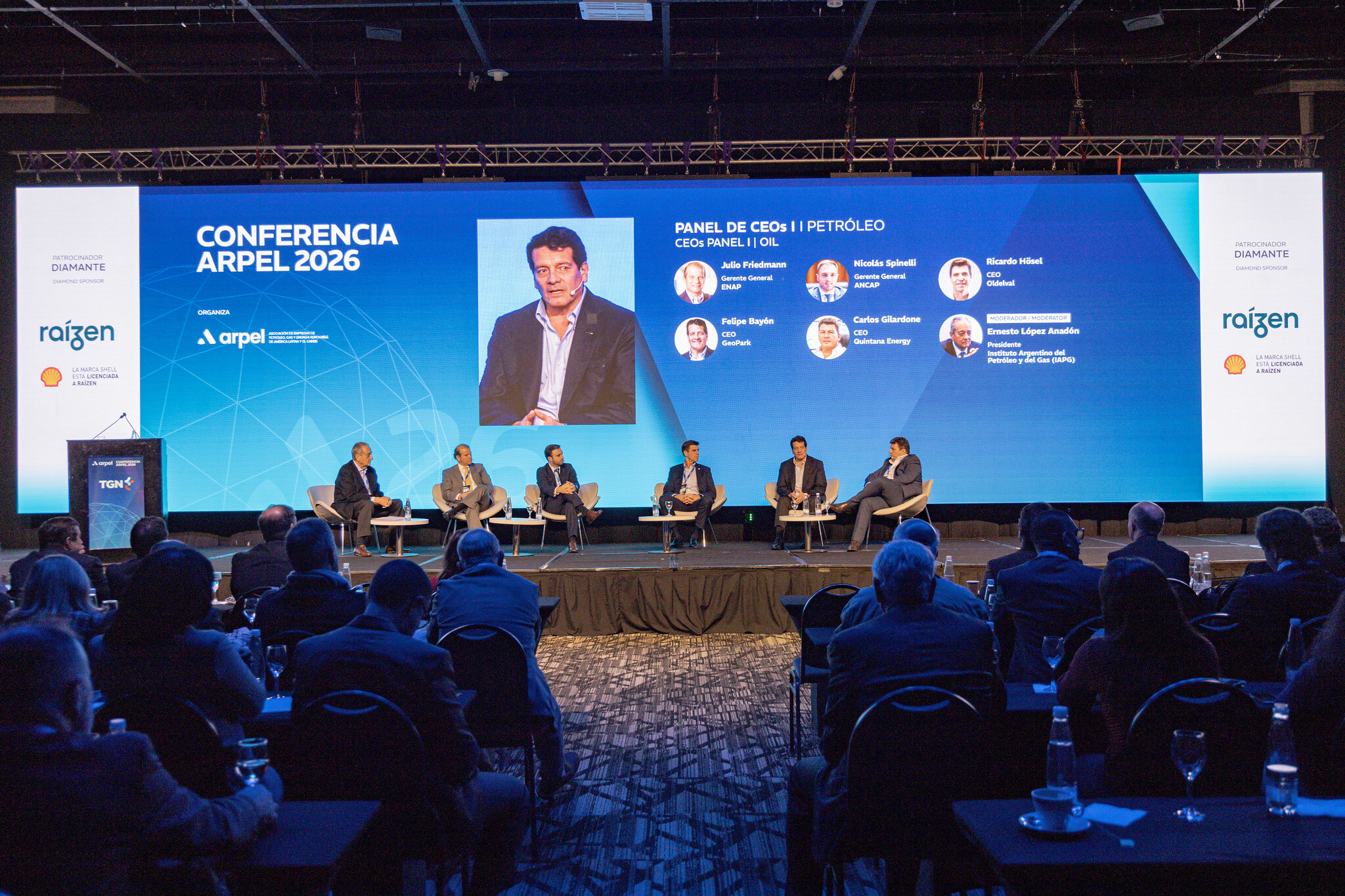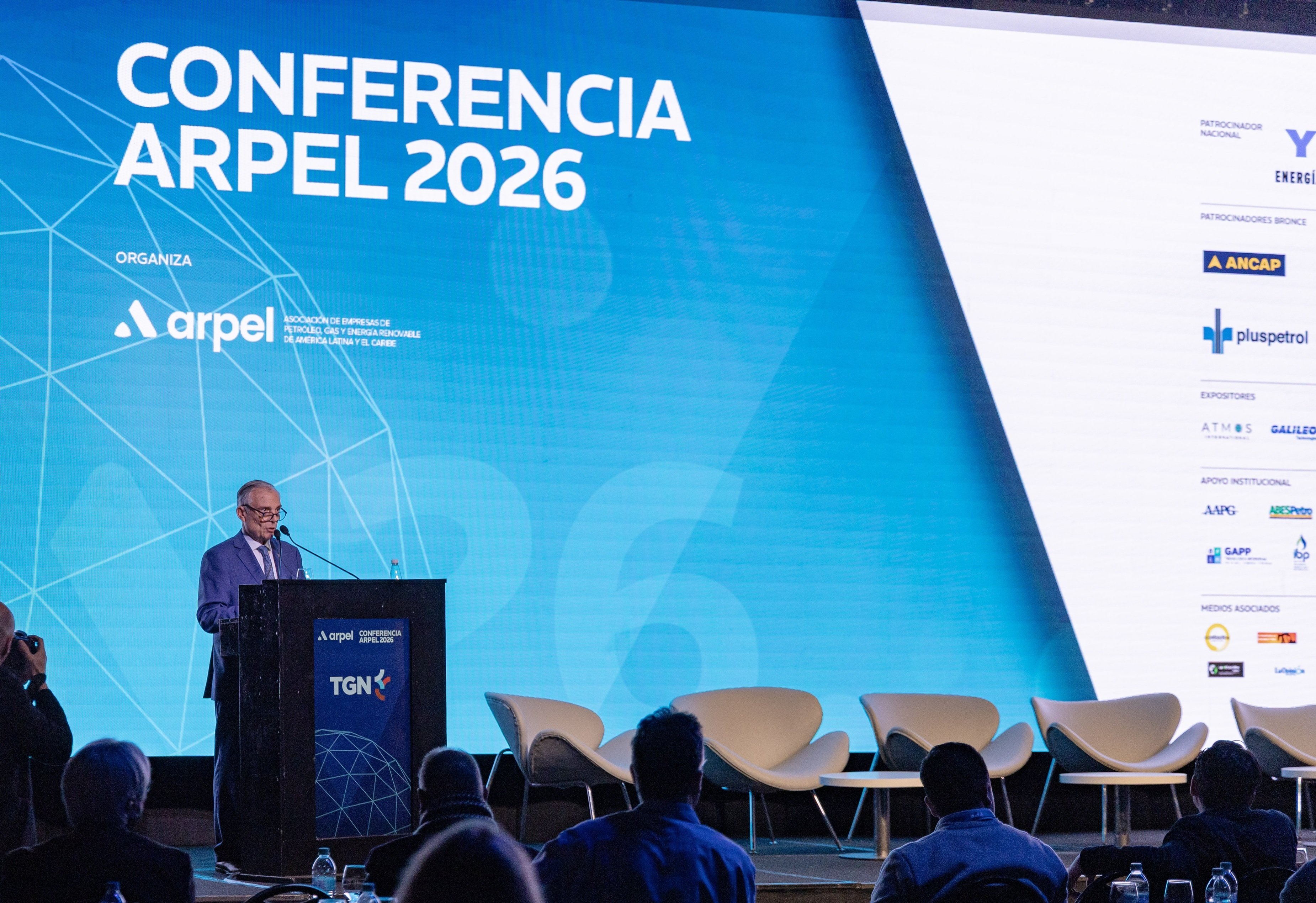
Arpel's Eighth Conference concluded with a call to embrace the complexity of the global energy system and move forward with a pragmatic approach. "Rather than an energy transition driven by the replacement of one energy source with another, what we are witnessing is an energy evolution," said Executive Secretary Carlos Garibaldi, reflecting the industry's perspective that emerged throughout the Conference's four-day program. He emphasized that renewable energy sources are "complementing fossil fuels to meet growing energy demand." Within this context, Garibaldi cautioned that "a paradigm shift cannot be imposed through protectionist policies" and argued that natural gas "is no longer a transitional bridge, but a key driver of decarbonization and regional integration."
In his closing remarks, he also underscored the need to accelerate structural transformation across the industry: "We must urgently continue decarbonizing our operations," he said, while also calling for progress on digitalization and cybersecurity. Referring to Latin America, he highlighted the region's "window of opportunity," driven by its geological potential and geopolitical conditions, while emphasizing that realizing this opportunity will depend on clear rules. "Today, more than ever, we need State policies, not just government policies," he said, calling for institutional stability, legal certainty, and public-private cooperation. "We still have much work ahead of us, but we will accomplish it together. Let us not squander this opportunity," he concluded.
OFFSHORE: COMPETITIVENESS, CLEAR RULES, AND SCALE ARE KEY TO UNLOCKING INVESTMENT
Global competition for capital and the need to convert resource potential into actual production shaped the discussion on offshore development in Latin America. Participants agreed that, despite the region's world-class resource potential, structural barriers remain. Representatives from Shell, YPF, IBP, Total Austral, ANCAP, and Rystad Energy emphasized that the key is to ensure macroeconomic stability, clear rules, and shorter lead times between discovery and development in areas such as Guyana, Suriname, Argentina, Brazil, and Colombia. As deepwater development regains momentum, panelists stressed that competitiveness relative to other investment destinations is critical and that "commercial viability and a stable investment climate are essential," together with predictable regulatory frameworks and access to data.
The companies also agreed that deepwater exploration has become increasingly selective because of its high costs and risks, making it essential to prioritize projects with scale and resilience within the competitive South Atlantic. The panel concluded that the challenge is not only geological or financial, but also institutional and social: attracting sustained investment, strengthening transparent regulatory frameworks, and ensuring that the region's offshore potential is translated into tangible economic development.
DEEPWATER AND GLOBAL ENERGY SECURITY
Jarand Rystad, CEO and Founder of Rystad Energy, warned that the world is experiencing "the greatest disruption to energy flows," a shock triggered by the war in Iran that is reshaping global energy security and reinforcing the strategic importance of deepwater resources. He explained that the crisis—with losses of up to 5.5 million barrels of oil per day, and more than 14 million barrels of oil equivalent per day when natural gas is included—placed strain on the system. However, the system proved resilient thanks to strategic reserves and alternative infrastructure, helping contain the impact on energy prices. Rystad argued that deepwater is regaining prominence, with record production exceeding 10 million barrels per day, investment of approximately USD 70 billion, and Latin America emerging as a key contributor to future global energy supply amid growing uncertainty.
CONVENTIONAL RESERVOIRS
Conventional reservoirs remain a cornerstone of global and regional hydrocarbon production, but they face the challenge of improving their competitiveness in a market increasingly dominated by the growth of unconventional resources. An expert panel concluded that increasing recovery factors, optimizing costs, and applying technological innovation will be critical to extending the productive life of mature fields.
GAS INTEGRATION: CHALLENGES AHEAD
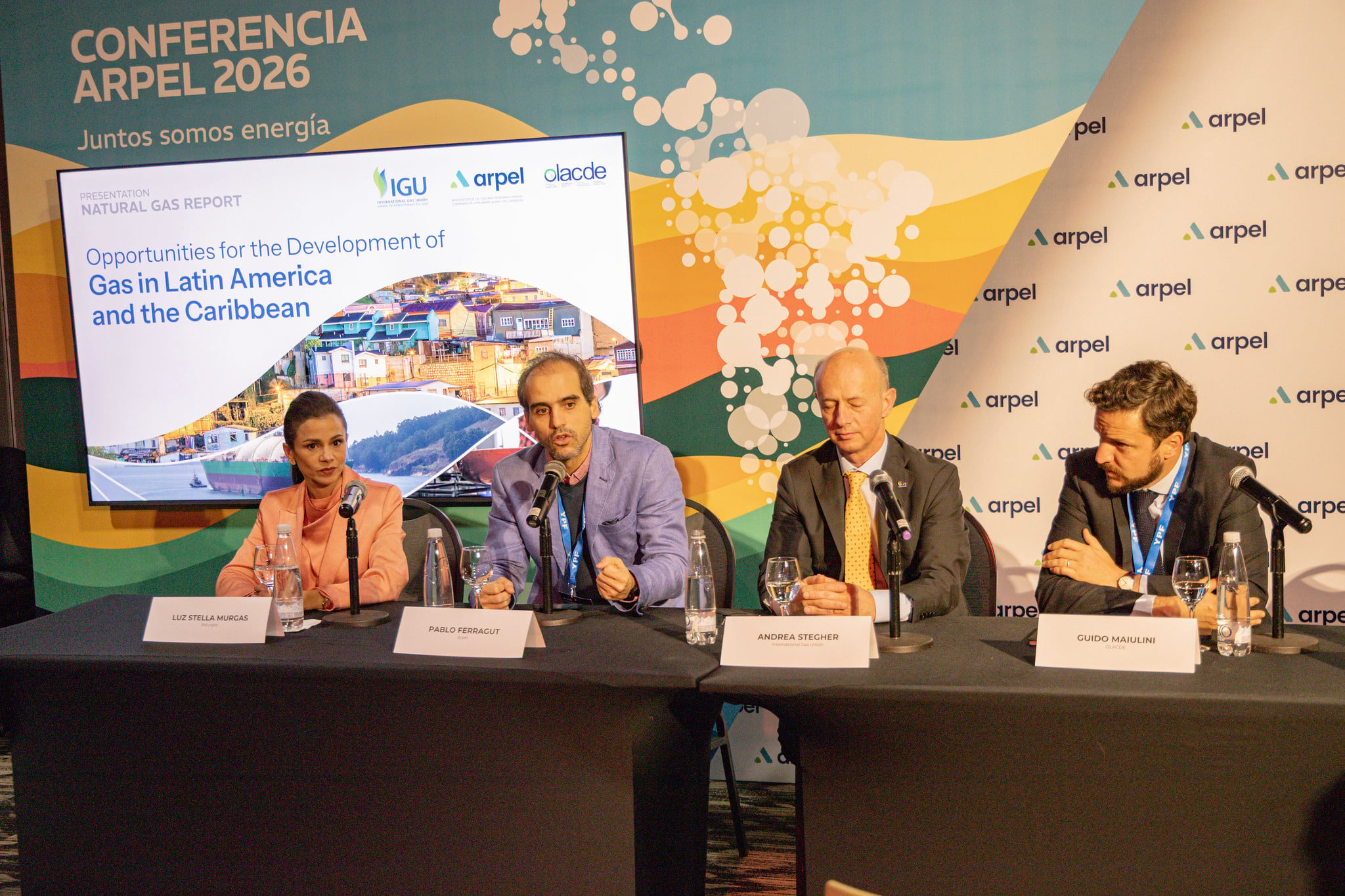
Natural gas integration in the Southern Cone is entering a new phase, driven by the potential of Vaca Muerta, declining production in Bolivia, and evolving regional demand, particularly in Brazil. During the panel discussion, experts agreed that the conditions are in place to expand regional gas trade. However, they emphasized that success will depend on developing infrastructure, ensuring competitiveness, and advancing long-term agreements that provide greater investment certainty.
The panel concluded that regional integration is viable, but its success will depend on aligning competitiveness, infrastructure, financing, and regulatory frameworks within an increasingly complex regional context.
CYBERSECURITY AND TECHNOLOGY
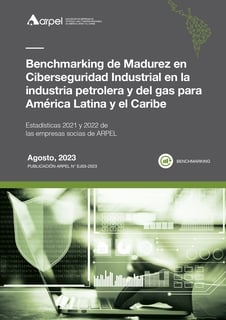
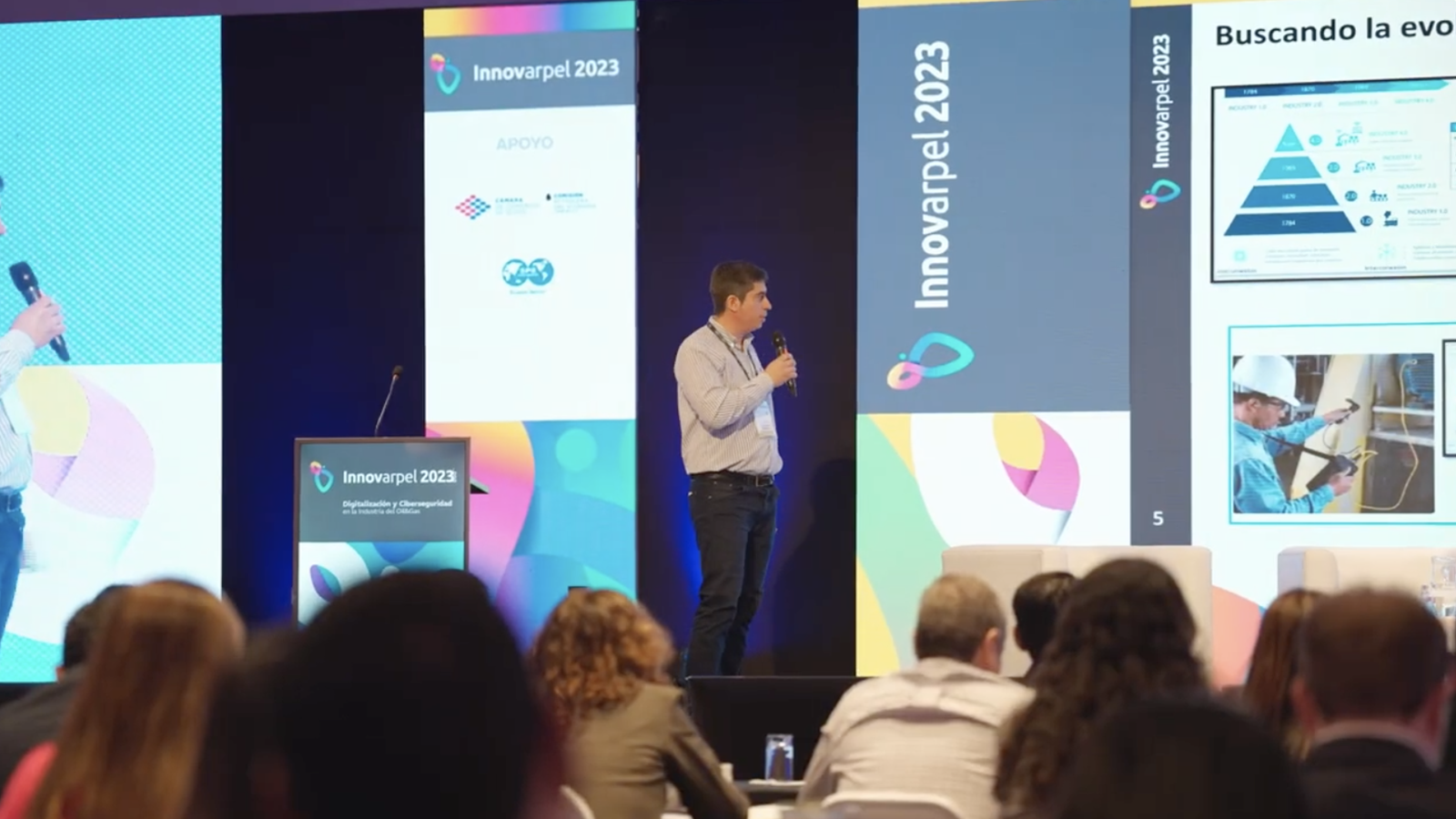
Cybersecurity consultant Julio Ardita emphasized that cybersecurity has become a strategic pillar for the oil and gas industry as digitalization continues to accelerate. He warned of growing threats such as ransomware, credential theft, and more than 2,500 identified vulnerabilities affecting industrial systems, particularly in environments characterized by cloud adoption, legacy systems, and 24/7 operations. To address these challenges, Ardita proposed a comprehensive strategy built around people, processes, and technology, with an emphasis on organizational culture, continuous monitoring, and multi-factor authentication—"that's where most intrusions occur"—highlighting that cybersecurity is a "continuous race" that is essential to ensuring business continuity across the sector.
Meanwhile, during the Technology with Purpose panel, specialists agreed that digital transformation in the oil and gas industry is no longer about adopting technology, but about applying it with purpose and scaling it across the entire operation to generate tangible business value. Panelists emphasized that the challenge is moving from pilot projects to large-scale implementation, with a focus on data integration, data quality, and cybersecurity, under the premise that "technology alone does not drive transformation" and that digitalization has become a key prerequisite for the sector's competitiveness.
.jpg)
.jpg)
.jpg)
.jpg)
.jpg)
Compartir en las redes