Noticias

Gas Resources Drive a New Phase of Energy Expansion in Latin America and the Caribbean: Decarbonization, Transport, and Socioeconomic Growth

Gas Resources Drive a New Phase of Energy Expansion in Latin America and the Caribbean: Decarbonization, Transport, and Socioeconomic Growth

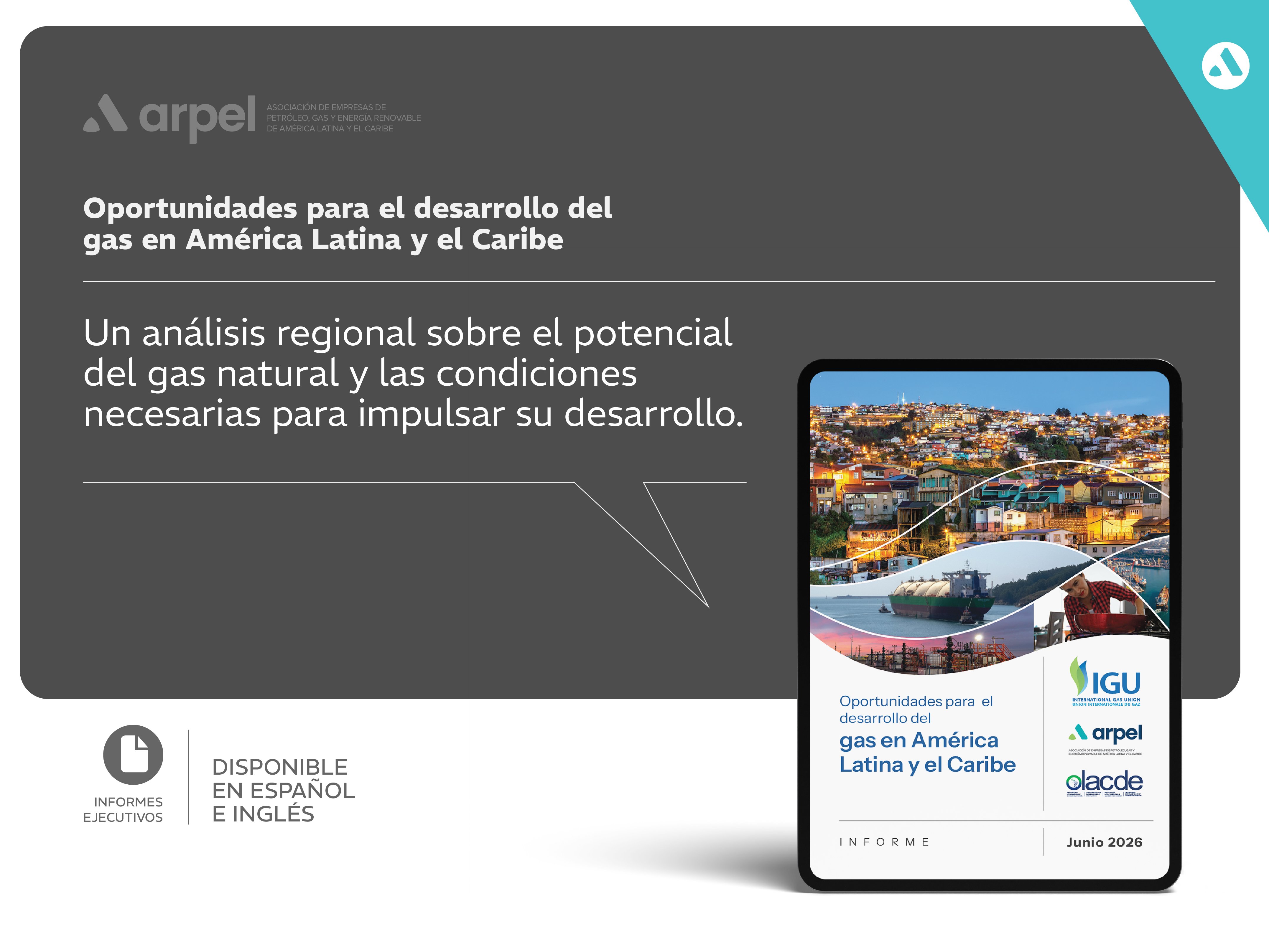
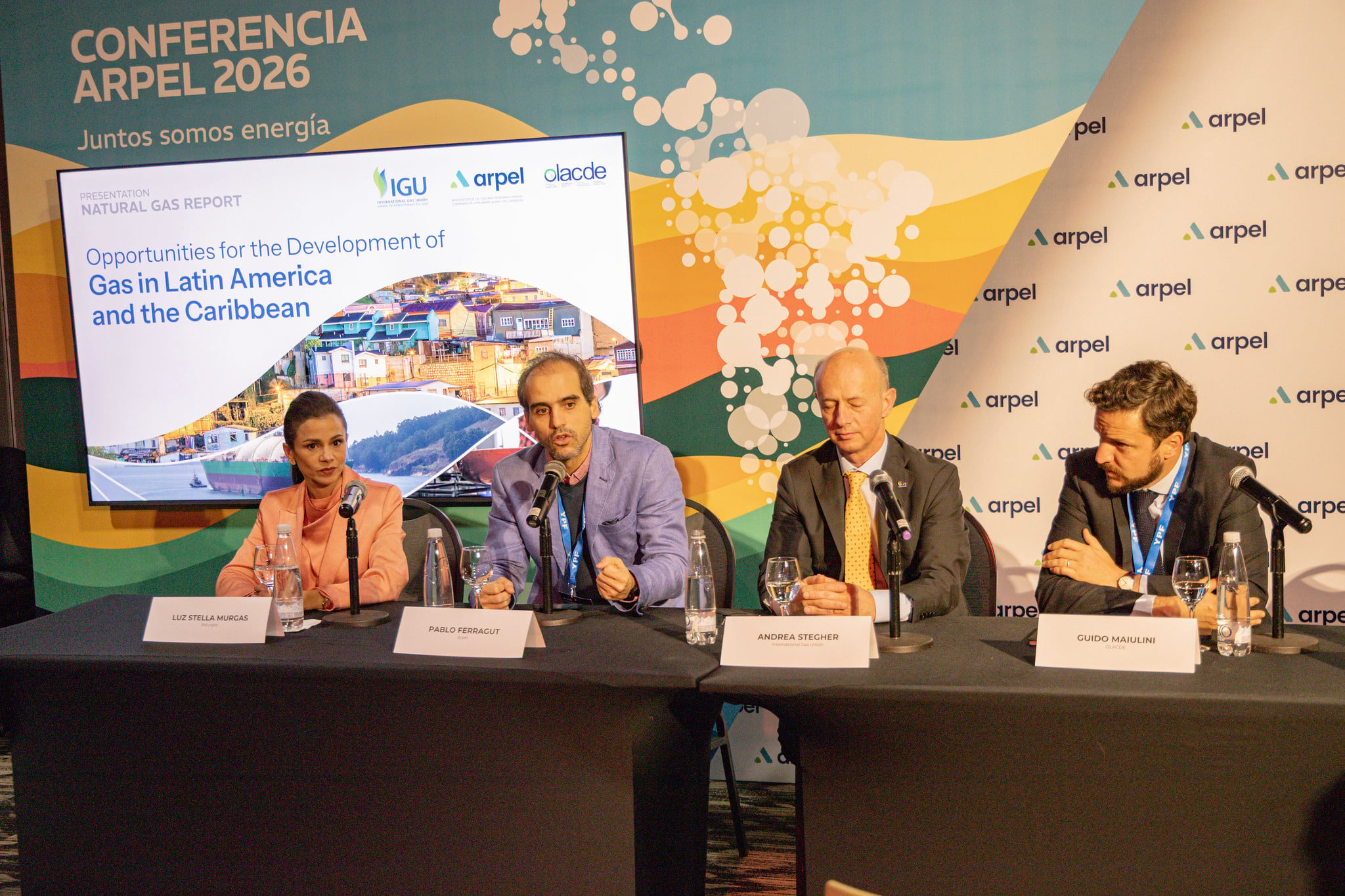
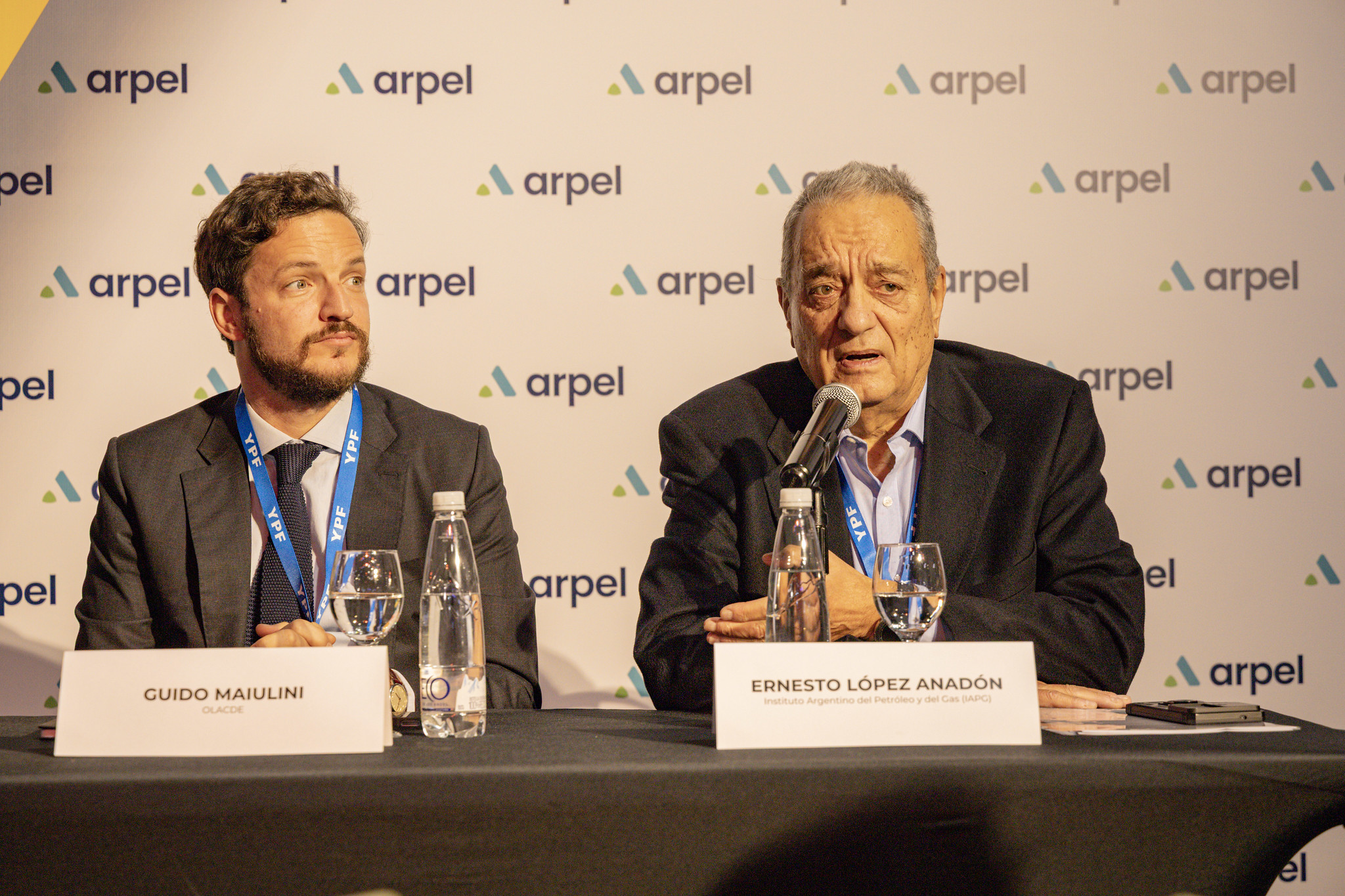
The report was jointly prepared by the International Gas Union (IGU), the Association of Oil, Gas and Renewable Energy Companies of Latin America and the Caribbean (ARPEL), and the Latin American and Caribbean Energy Organization (OLACDE).

The study highlights that Latin America and the Caribbean possess significant geological potential and vast energy resources. However, according to the report, which was unveiled on Tuesday, the region accounted for only 5% of global natural gas production in 2024. The report estimates that more than US$10 billion in investment will be required to close this gap and advance regional energy integration through the construction and expansion of cross-border gas pipeline infrastructure.

At the same time, the report warns that, in order to monetize reserves, mobilize public and private capital, and secure blended financing mechanisms and support from multilateral development banks, it is essential for legal frameworks and industry regulations to transcend political cycles and changes in government.

The report also notes that the reserves of Vaca Muerta, together with other conventional offshore projects and Brazil’s pre-salt fields, could usher in a new phase of energy expansion in the Southern Cone. These resources would complement the established production of countries such as Venezuela, Bolivia, Peru, and Trinidad and Tobago, as well as emerging exploration frontiers in Guyana and Suriname.

This development could generate direct benefits for Argentina by reducing LNG imports and increasing exports, positioning the country as a major player in the global LNG market. At the regional level, Argentine gas could support Brazil’s reindustrialization through competitive pricing, enable Bolivia to monetize its underutilized infrastructure through transit fees, and provide Chile and Uruguay with a more cost-effective alternative to imported LNG.

The Role of Natural Gas in Decarbonization

The report argues that natural gas can deliver rapid emissions reductions by replacing more carbon-intensive fuels in thermal power generation. According to the IPCC, the use of natural gas can reduce greenhouse gas emissions by approximately 24%, 28%, and 42% per unit of primary energy when replacing diesel, fuel oil, and coal in electricity generation, respectively.

In addition, natural gas serves as an essential backup for variable renewable energy sources such as solar and wind, particularly during hydrological crises. This was evident in Brazil in 2021, when gas-fired generation had to double in order to avoid power supply disruptions.

This substitution is particularly relevant in several countries across Central America and the Caribbean, where electricity systems continue to rely heavily on petroleum-derived fuels. Countries such as Grenada, Haiti, Barbados, Cuba, Nicaragua, Belize, Guyana, and Suriname depend on these liquid fuels for more than 50% of their electricity generation. In these systems, switching to natural gas can deliver immediate environmental and economic benefits without requiring major structural changes to the operation of the power system.

The Role of Natural Gas in Transport

In the heavy-duty transport sector, the shift toward Compressed Natural Gas (CNG) and Liquefied Natural Gas (LNG) can reduce emissions by approximately 20%, offering a commercially available solution to advance the decarbonization of the sector. The report notes that, while low-carbon fuels such as methanol, ammonia, and hydrogen hold significant long-term potential, both the technologies and the infrastructure required for their deployment continue to face maturity and scalability challenges.

From a supply-side perspective, monetizing the region’s natural gas reserves can drive economic growth, strengthen trade balances through increased exports and reduced imports, and support social development by expanding access to cleaner, more affordable, and reliable energy.

A clear example can be found in Colombia, where the Multidimensional Energy Poverty Index (IMPE), developed by Promigas, shows that the incidence of energy poverty declined from 16.9% to 15.4% between 2022 and 2024, representing an improvement for approximately 300,000 people and demonstrating that access to affordable energy directly improves quality of life.

In addition, the integration of renewable gases such as biomethane can strengthen local development, create income-generating opportunities in rural areas, improve waste management, and reduce emissions, while leveraging existing infrastructure.

About the Report: Opportunities for the Development of Gas in Latin America and the Caribbean

The report aims to contribute constructively to the international energy dialogue by highlighting the role that natural gas can play in supporting the region’s energy transition, strengthening energy security, and fostering sustainable socioeconomic development.

Its preparation included consultations with leading companies in the sector, national gas associations, and regional experts, reflecting a broad industry perspective on the opportunities and challenges facing the natural gas sector across the region.

 

  • Tags:
    • Seguridad
    • Medio Ambiente
    • Digitalización
    • Exploración
    • Transiciones Energéticas
    • Sostenibilidad
    • Ciberseguridad
    • Salud Ocupacional
    • Supply Chain
    • Talento Humano y Gestión del Conocimiento
    • Normativa
    • Management
    • Otras energías
    • Transporte
    • Refinación
    • Producción
    • Gas
    • Terminales
    • Petroquímica

Contenido relacionado

Noticias (4)
Recursos de gas posicionan a América Latina y el Caribe en una nueva fase de expansión energética: descarbonización, transporte y crecimiento socioeconómico

Seguridad, Medio Ambiente, Digitalización

Recursos de gas posicionan a América Latina y el Caribe en una nueva fase de expansión energética: descarbonización, transporte y crecimiento socioeconómico

Vaca Muerta podría ser el motor de la integración energética regional, según el reporte... Seguir leyendo
América Latina se convierte en la respuesta energética en un mundo incierto y en redefinición

Seguridad, Medio Ambiente, Digitalización

América Latina se convierte en la respuesta energética en un mundo incierto y en redefinición

El mundo mira a América Latina. En la apertura de la Conferencia Arpel 2026, expertos... Seguir leyendo
Geopolítica, Vaca Muerta y el rol del gas natural en la región, ejes de la Conferencia Arpel 2026

Seguridad, Medio Ambiente, Digitalización

Geopolítica, Vaca Muerta y el rol del gas natural en la región, ejes de la Conferencia Arpel 2026

En un escenario internacional atravesado por tensiones geopolíticas y cambios estructurales en los... Seguir leyendo
La 8ª Conferencia Arpel 2026 se realizará en Buenos Aires

Seguridad, Medio Ambiente, Digitalización

La 8ª Conferencia Arpel 2026 se realizará en Buenos Aires

Del 1° al 4 de junio, el Hotel Hilton Buenos Aires será sede de este espacio de diálogo regional... Seguir leyendo
Eventos (4)
Semana Arpel-Naturgas 2024

Refinación, Terminales, Gas

Semana Arpel-Naturgas 2024

Arpel, la Asociación de Empresas de Petróleo, Gas y Energía Renovable de América Latina y el... Más info
Mejorar el desempeño en Seguridad de Procesos

Seguridad

Mejorar el desempeño en Seguridad de Procesos

API publicó la tercera edición de la Práctica Recomendada (RP) 754, Indicadores de desempeño de... Más info
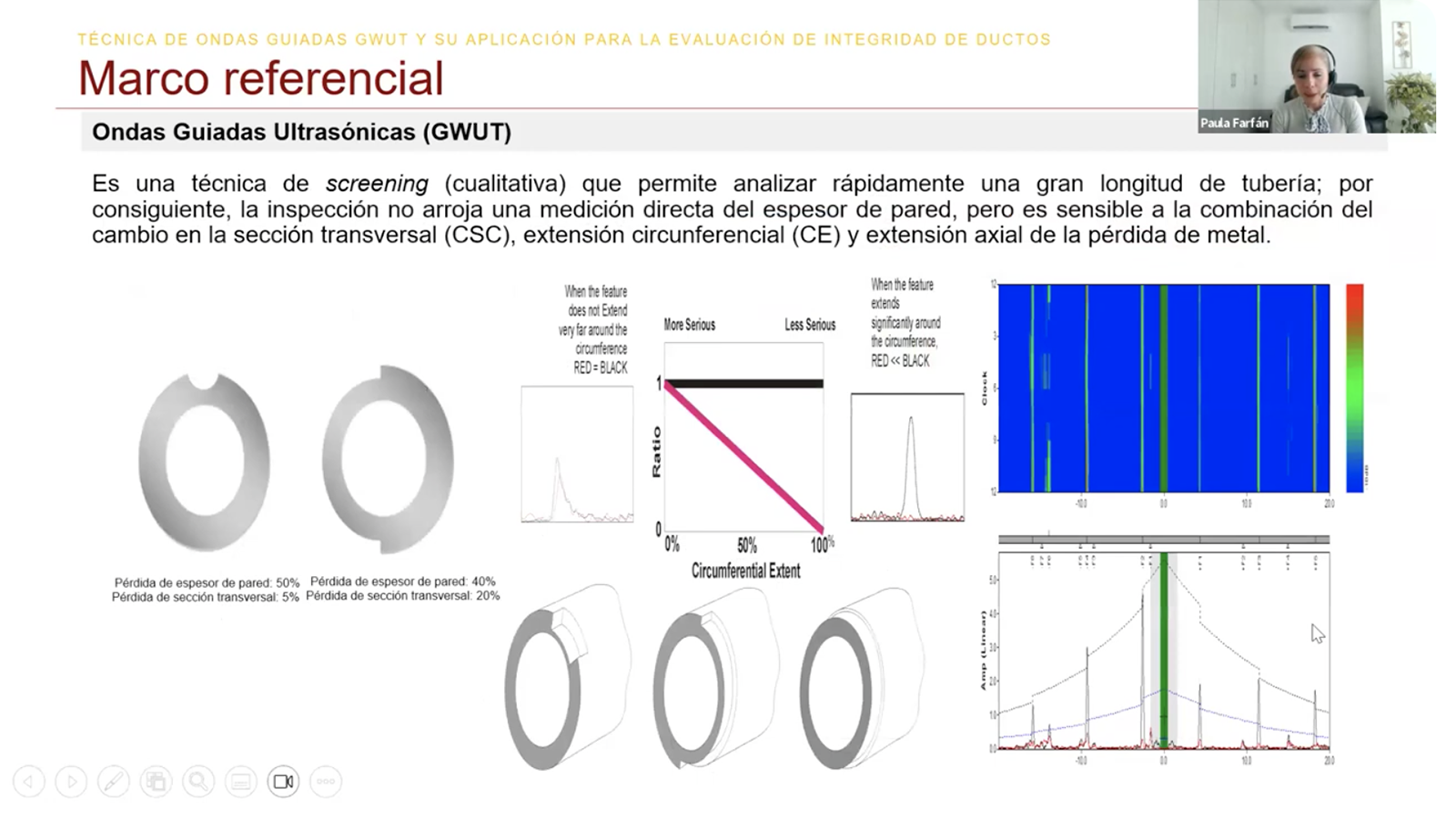
Técnica de Ondas Guiadas GWUT

Transporte, Terminales

Técnica de Ondas Guiadas GWUT

Durante la presentación, se hará un recorrido sobre la técnica de inspección con el uso de ondas... Más info
Estado de reporte Net Zero en el sector de Petróleo y Gas de América Latina

Sostenibilidad

Estado de reporte Net Zero en el sector de Petróleo y Gas de América Latina

Exponer los resultados del estudio enfocado en construir una línea base del estado del reporte en... Más info
Cursos (4)
EN50: Gestión de Ciberseguridad Industrial para proyectos en el sector de Energía, Petróleo y Gas

Ciberseguridad

EN50: Gestión de Ciberseguridad Industrial para proyectos en el sector de Energía, Petróleo y Gas

Curso perteneciente al Programa de Capacitación en Ciberseguridad Industrial para empresas de... Más info
EN60: Evaluación de riesgos cibernéticos en sistemas industriales nuevos y existentes en energía, petróleo y gas

Ciberseguridad

EN60: Evaluación de riesgos cibernéticos en sistemas industriales nuevos y existentes en energía, petróleo y gas

Curso perteneciente al Programa de Capacitación en Ciberseguridad Industrial para empresas de... Más info
EN50: Gestión de Ciberseguridad Industrial para proyectos en el sector de Energía, Petróleo y Gas

Ciberseguridad

EN50: Gestión de Ciberseguridad Industrial para proyectos en el sector de Energía, Petróleo y Gas

Curso perteneciente al Programa de Capacitación en Ciberseguridad Industrial para empresas de... Más info
EN60: Evaluación de riesgos cibernéticos en sistemas industriales nuevos y existentes en energía, petróleo y gas

Ciberseguridad

EN60: Evaluación de riesgos cibernéticos en sistemas industriales nuevos y existentes en energía, petróleo y gas

Curso perteneciente al Programa de Capacitación en Ciberseguridad Industrial para empresas de... Más info
Publicaciones (4)
Benchmarking de Madurez en Ciberseguridad Industrial en la industria petrolera y del gas para América Latina y el Caribe

Ciberseguridad

Benchmarking de Madurez en Ciberseguridad Industrial en la industria petrolera y del gas para América Latina y el Caribe

Este manual provee una descripción general de la metodología desarrollada por Arpel para llevar... Más info
Informe Arpel para la alta gerencia sobre Cambio Climático COP27

Producción

Informe Arpel para la alta gerencia sobre Cambio Climático COP27

Este informe resume las principales conclusiones de la 27° Conferencia de las Partes de la... Más info
Políticas de descarbonización en América Latina y el Caribe

Producción

Políticas de descarbonización en América Latina y el Caribe

Arpel decide compilar y analizar en el presente informe, las políticas nacionales vigentes o en... Más info
Informe Anual Arpel 2022

Producción

Informe Anual Arpel 2022

Este documento compila las actividades llevadas a cabo durante 2022 para impulsar los cuatro... Más info
Canal Arpel (4)
Webinar Técnica de Ondas guiadas GWUT. Aplicación para la evaluación de Integridad de Ductos

Terminales, Transporte, Refinación

Webinar Técnica de Ondas guiadas GWUT. Aplicación para la evaluación de Integridad de Ductos

Ver video
Semana Arpel-Naturgas 2024 - 8 al 12 de abril en Cartagena de Indias

Transiciones Energéticas, Sostenibilidad, Digitalización

Semana Arpel-Naturgas 2024 - 8 al 12 de abril en Cartagena de Indias

Ver video
Webinar Evaluando los planes de descarbonización de la industria de O&G. World Benchmarking Alliance

Medio Ambiente, Transiciones Energéticas, Sostenibilidad

Webinar Evaluando los planes de descarbonización de la industria de O&G. World Benchmarking Alliance

Ver video
Innovarpel 2023, primera edición de evento técnico dedicado a Digitalización y Ciberseguridad

Digitalización, Ciberseguridad, Supply Chain

Innovarpel 2023, primera edición de evento técnico dedicado a Digitalización y Ciberseguridad

Ver video

Reciba en su correo un resumen de las principales actividades realizadas por la Asociación.

Boletín de Noticias Arpel

Suscribirse

ASOCIACIÓN DE EMPRESAS DE PETRÓLEO, GAS Y ENERGÍA RENOVABLE DE AMÉRICA LATINA Y EL CARIBE

Av. Luis A. de Herrera 1248. WTC. Torre 2. Piso 7. Of. 717. Montevideo, Uruguay.
Tel: (+598) 2623 6993 – E-mail: info@arpel.org.uy

Contáctenos