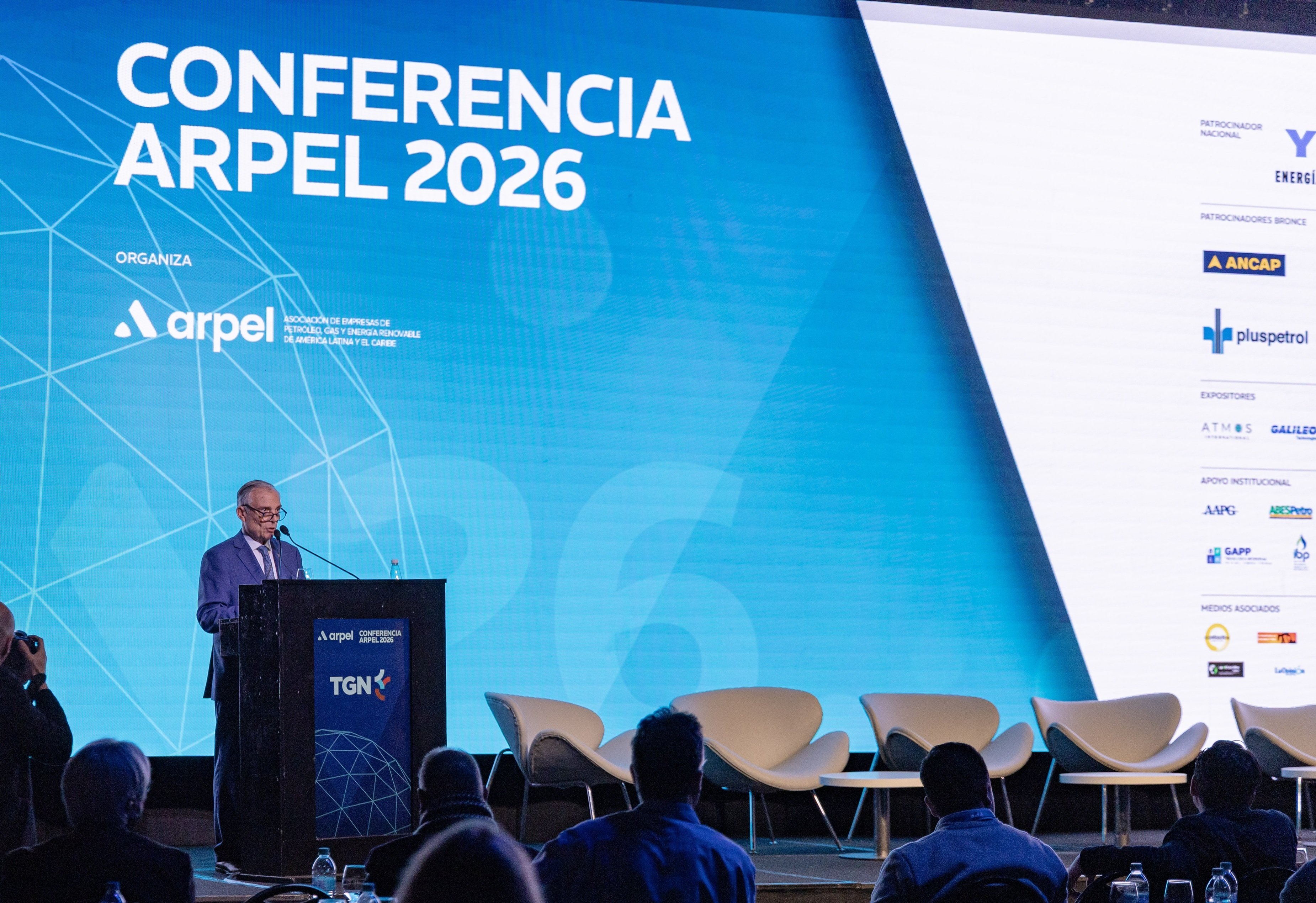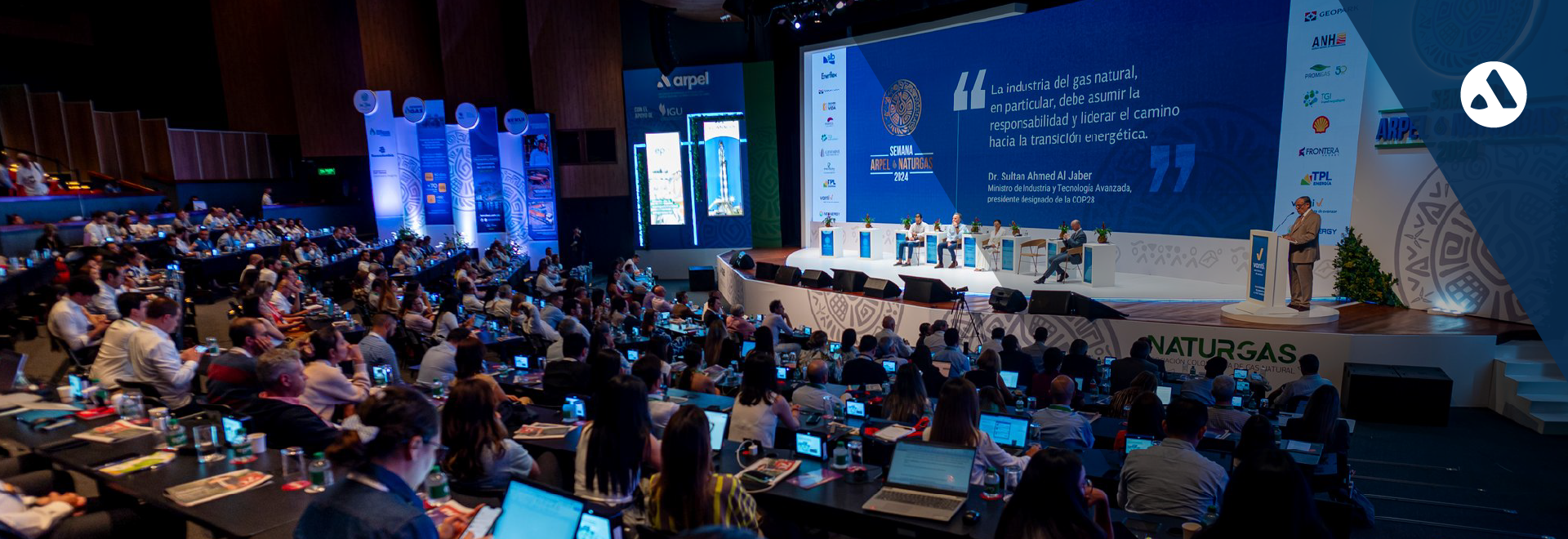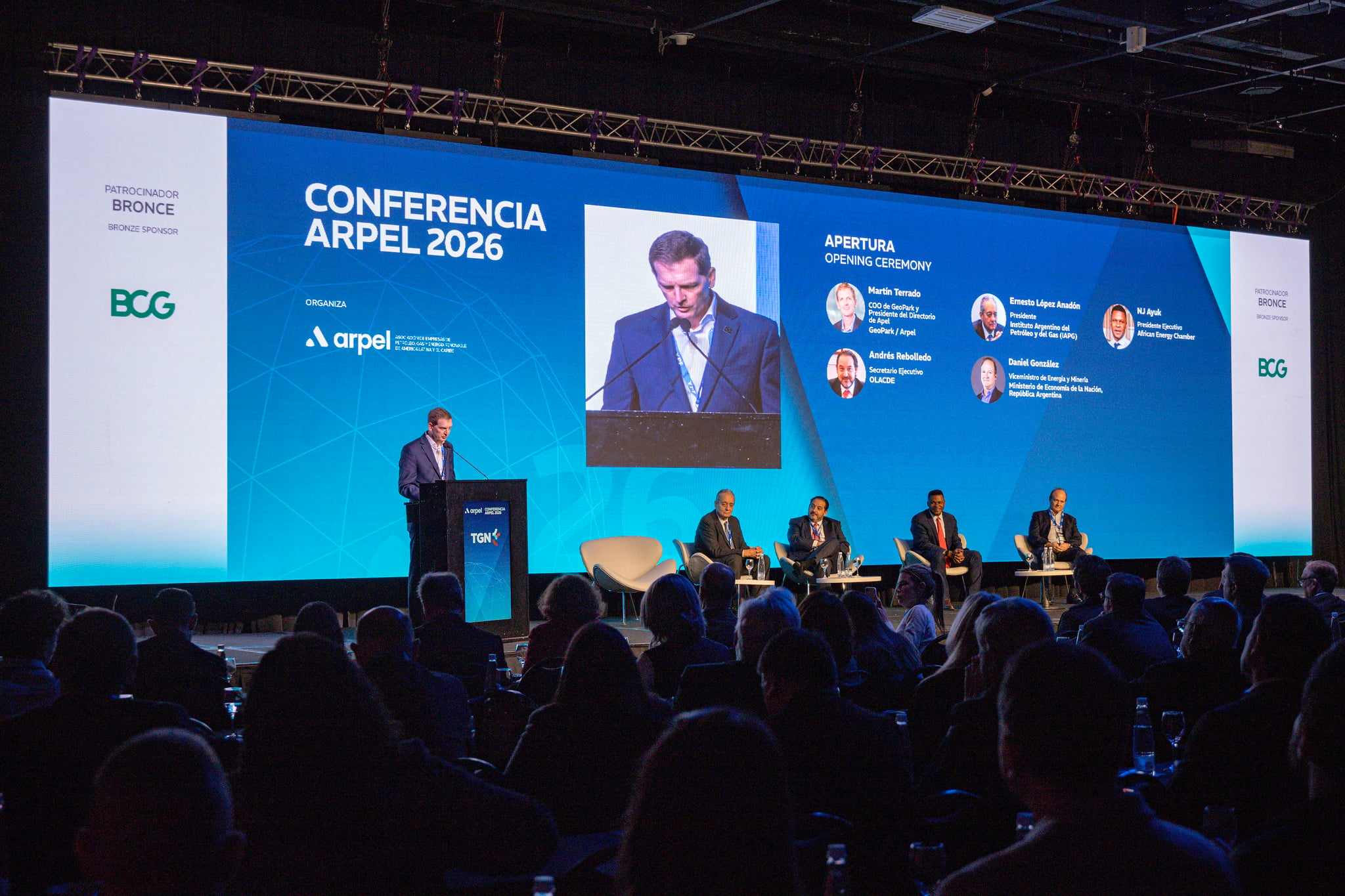
The opening day of Arpel Conference 2026 in Buenos Aires delivered a clear message: amid an increasingly complex global energy landscape, Latin America has a historic opportunity to establish itself as a key player. The tone was set by Daniel Yergin, Vice Chairman of S&P Global, who warned that the world is entering a period of heightened uncertainty, geopolitical tensions, and a slower-than-expected energy transition. “I wouldn’t call it a turning point, but we are seeing changes,” he said during a conversation with Carlos Garibaldi, Executive Secretary of the Latin American and Caribbean Association of Oil, Gas and Renewable Energy Companies (Arpel), as he described a less predictable landscape in which “the key is to remain flexible and competitive.”
Yergin argued that the energy business is no longer defined solely by the availability of resources. “The industry extends far beyond resource availability,” he said, highlighting infrastructure, investment, and logistics as decisive factors. In this context, he warned that shale “has reached a plateau” and that the industry will need to “go beyond” it in order to sustain future growth. At the same time, he described an international landscape marked by growing tensions: “the war with Iran is not over,” China is emerging as “a major winner thanks to its commitment to electrification,” and Europe continues to face energy supply challenges, while the oil market is at “a crossroads” amid constrained supply.
Against this backdrop, the expert was unequivocal about the region’s role: “this is an opportunity for Latin America.” According to Yergin, Latin America—along with Africa—will be one of the leading destinations for investment, driven by its resource base, competitive costs, and the global need to diversify energy supply. The shift is already becoming visible: “the center of gravity of oil production” is moving toward Latin America, with Brazil, Guyana, and Argentina playing an increasingly prominent role.
At the same time, Yergin challenged more extreme views of the energy transition: “we cannot say there will be net zero by 2050; that is not realistic,” he stated, emphasizing that oil and natural gas will remain part of the global energy mix for longer than many projections suggest.
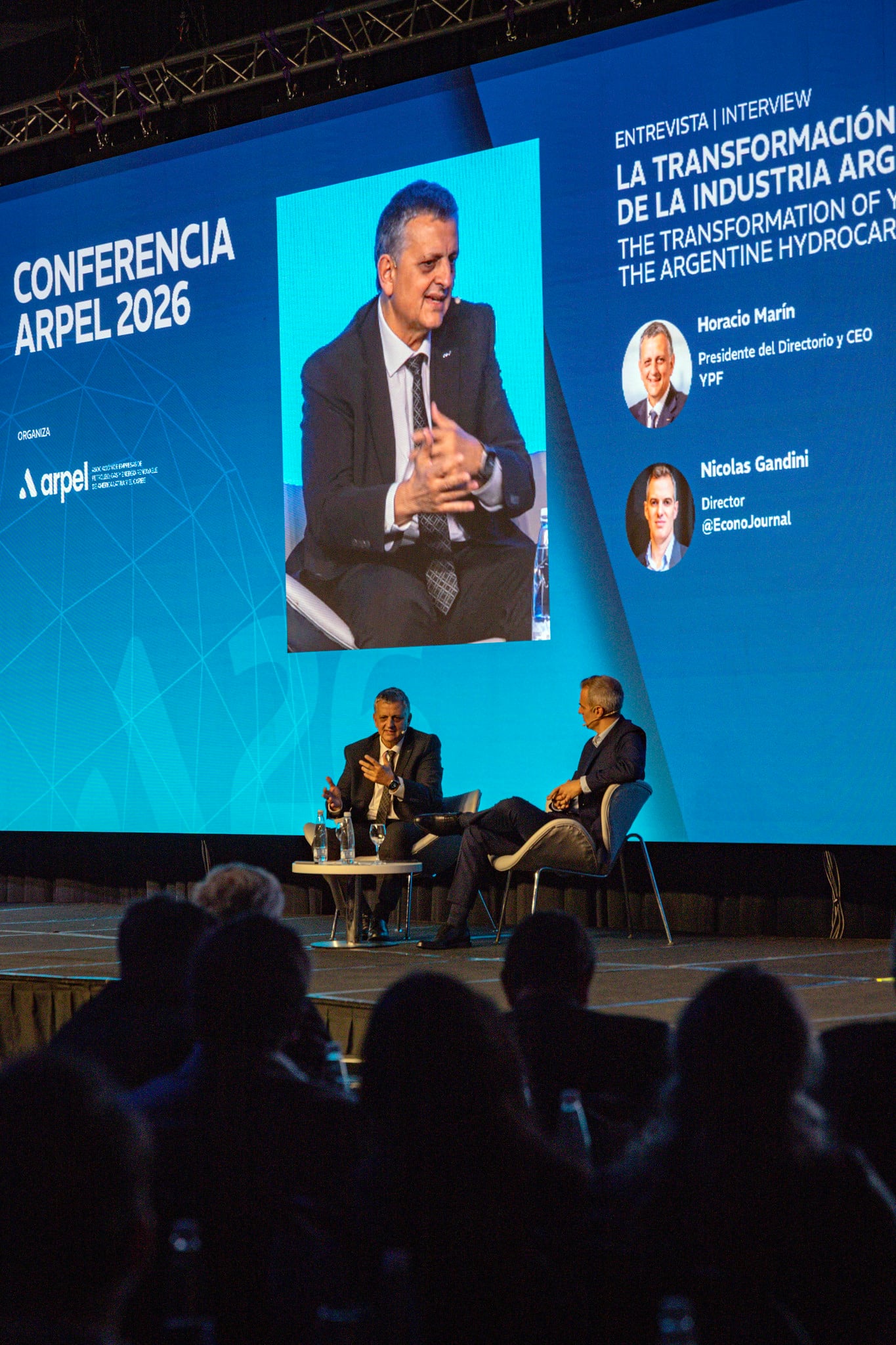
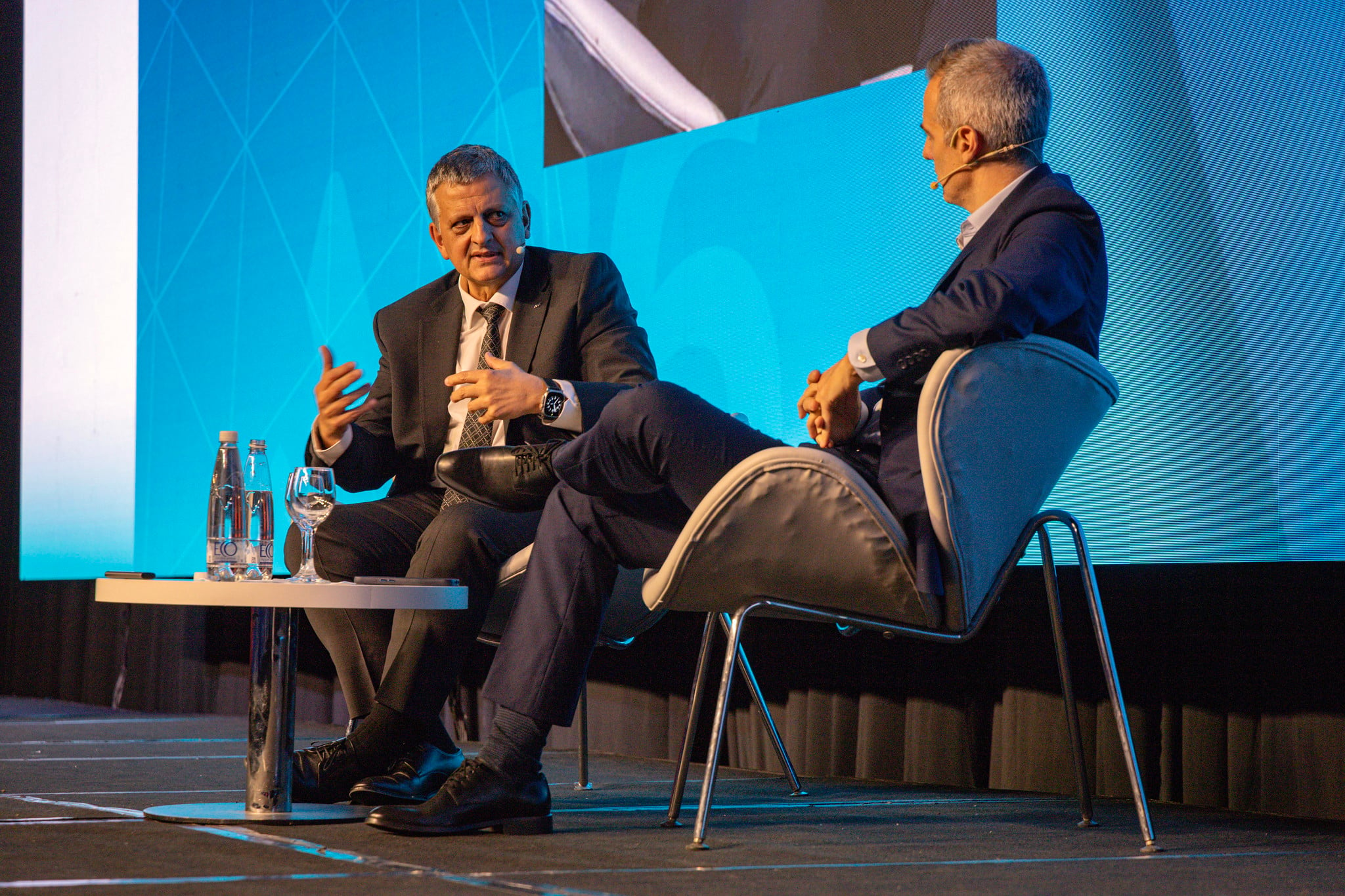
Argentina stands out as one of the clearest examples of this potential. Horacio Marín, CEO of YPF, outlined a scenario of strong growth driven by the development of Vaca Muerta and LNG projects. “We are all witnessing the full-scale development of Vaca Muerta, but more than gas, it is about LNG,” he said, forecasting exports of up to US$20 billion once the project is fully underway. The company aims to “double its size” and increase production to record levels, with the country potentially reaching 800,000 barrels per day. “Argentina will become one of the world’s leading exporters,” he asserted.
Other industry leaders echoed this assessment. Martín Terrado, COO of GeoPark and Chairman of Arpel’s Board of Directors, stated that “this is poised to be Latin America’s decade,” while Bob Fryklund, Vice President and Chief Upstream Strategist at S&P Global, noted that “the growth in global energy supply is coming out of Latin America.” In a context of “volatility and uncertainty,” as summarized by Roberto Brandt, International Energy Consultant and Non-Resident Fellow at the Center for Energy Studies of the Baker Institute at Rice University, energy security has returned to the forefront of the global agenda, prompting major economies to look to the region as a key supplier.
In the closing session, industry representatives agreed that Latin America is facing a pivotal opportunity in the global energy landscape. Ernesto López Anadón, President of the Argentine Institute of Oil and Gas (IAPG), warned of “tremendous volatility” and the challenge of understanding “how we are going to emerge from this uncertainty.” N.J. Ayuk, Executive Chairman of the African Energy Chamber, argued that “this is a time to add energy, not reduce it,” and called for deeper cooperation. Andrés Rebolledo, Executive Secretary of the Latin American and Caribbean Energy Organization (OLACDE), projected that the region “will likely be the fastest-growing non-OPEC hydrocarbons producer,” albeit within a context of “recalibration.” Meanwhile, Daniel González, Argentina’s Vice Minister of Energy and Mining, emphasized that “the future is very promising” for the country.
The conclusion of the day was unequivocal: in a fragmented world undergoing transition, Latin America possesses the resources, scale, and opportunity to play a leading role. The challenge, experts agreed, will be to translate that potential into sustained investment, stability, and a clear regulatory framework to secure the region's place in the emerging global energy order.
Compartir en las redes