By Irene Alfaro, Senior Managing Director
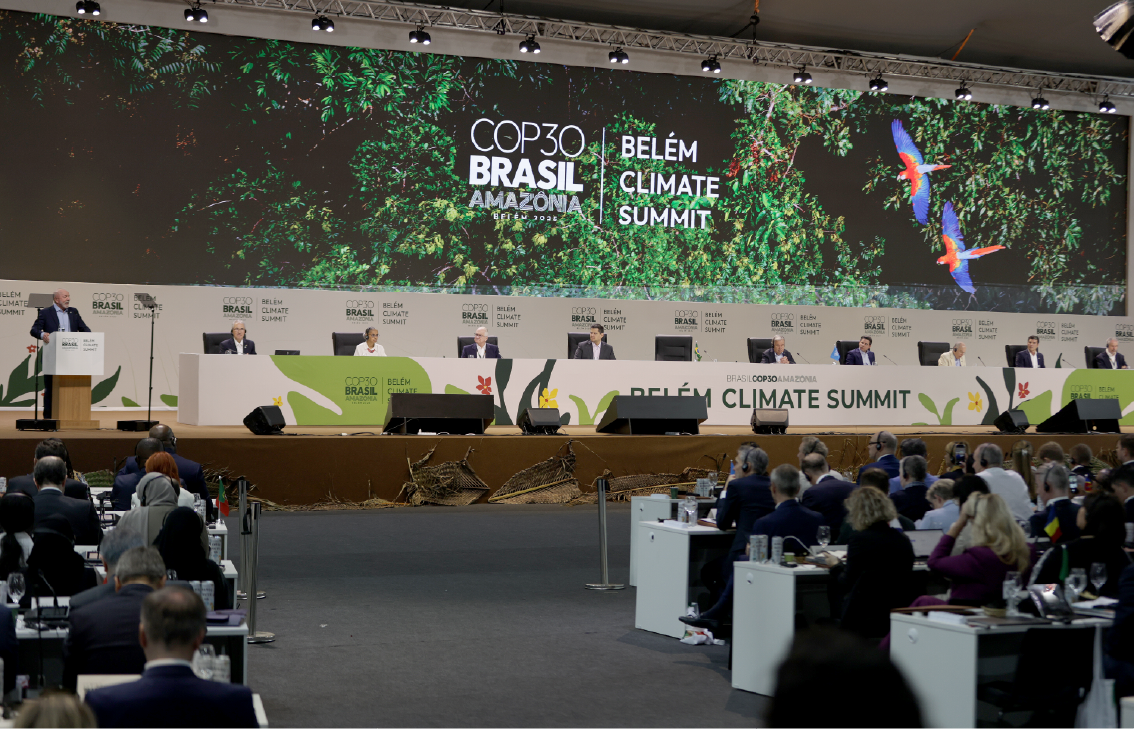
COP30, held in Belém, Brazil, marked a turning point for the region and for Arpel, consolidating its role as a reference in the just energy transition and climate adaptation. For the first time in its history, Arpel co-organized an official side event together with Ipieca and the United States Council for International Business (USCIB), entitled “Just Transition and Adaptation: A Global Business Dialogue.” This meeting provided an opportunity to delve deeper into progress toward the Global Goal on Adaptation (GGA) and the UAE Just Transition Work Programme (JTWP), on the tenth anniversary of the Paris Agreement.
Regional leadership in a just transition
Arpel’s active participation at COP30 not only demonstrated the association’s commitment to the global climate agenda, but also positioned the region as a key player in shaping innovative and equitable solutions. The event underscored the need for cooperation across sectors and regions, highlighting that the energy transition and climate adaptation require private sector leadership, innovation, community engagement, and the development of green skills.
Through its Energy Transitions Committee, Arpel has fostered multisectoral dialogue and knowledge generation, promoting energy justice and resilience. The publication of the white paper “Just Energy Transitions in Latin America and the Caribbean” in 2023, developed by consensus among all member companies, helped frame the discussion on the challenges and opportunities of the transition and laid the foundations for the region’s competitive development.
Concrete actions by member companies
Arpel’s member companies have taken an active role in implementing actions aligned with the Paris Agreement. The most relevant initiatives include, among others:
- Management of Physical and Transition Climate Risks: Capabilities and tools have been developed to identify and manage risks, strengthening climate resilience and operational continuity.
- Carbon Markets: Companies have deepened their understanding of carbon markets by participating in capacity-building workshops and exploring how nature-based solutions can support offsetting measures and science-based targets.
- Just Energy Transitions: The exchange of experiences has been encouraged, along with the integration of the just transition concept into concrete projects, facilitating dialogue with external stakeholders and among member companies.
- Greenhouse Gas Emissions Reduction: Companies have put forward concrete actions to advance decarbonization, including the measurement and reduction of methane emissions, process digitalization, and diversification into renewable energy sources.
Collaboration and dialogue as drivers of change
During COP30, the importance of collaboration among organizations to accelerate the energy transition and ensure a sustainable future was reaffirmed. The private sector, represented by Arpel and its member companies, demonstrated that innovation and collective commitment are essential to addressing the climate challenge and ensuring a responsible energy supply.
Complementarity between public and private policies, measuring progress through clear indicators, and promoting social dialogue were identified as key elements for an equitable transition. Arpel consolidated its position as a regional leader in energy justice and innovation, reaffirming its determination to work collaboratively and share best practices.
Looking ahead: challenges and opportunities
The work carried out at COP30 lays the foundations for the years ahead. Looking ahead to the 2026 conference, Arpel will continue to strengthen its strategic pillars, expand the scope of its initiatives, and promote the active engagement of its member companies in building a more resilient and sustainable region.
The path toward achieving the goals of the Paris Agreement is challenging, but the experience of COP30 shows that, through strong partnerships and collective action, it is possible to move forward toward a just, inclusive, and sustainable energy transition.
Compartir en las redes