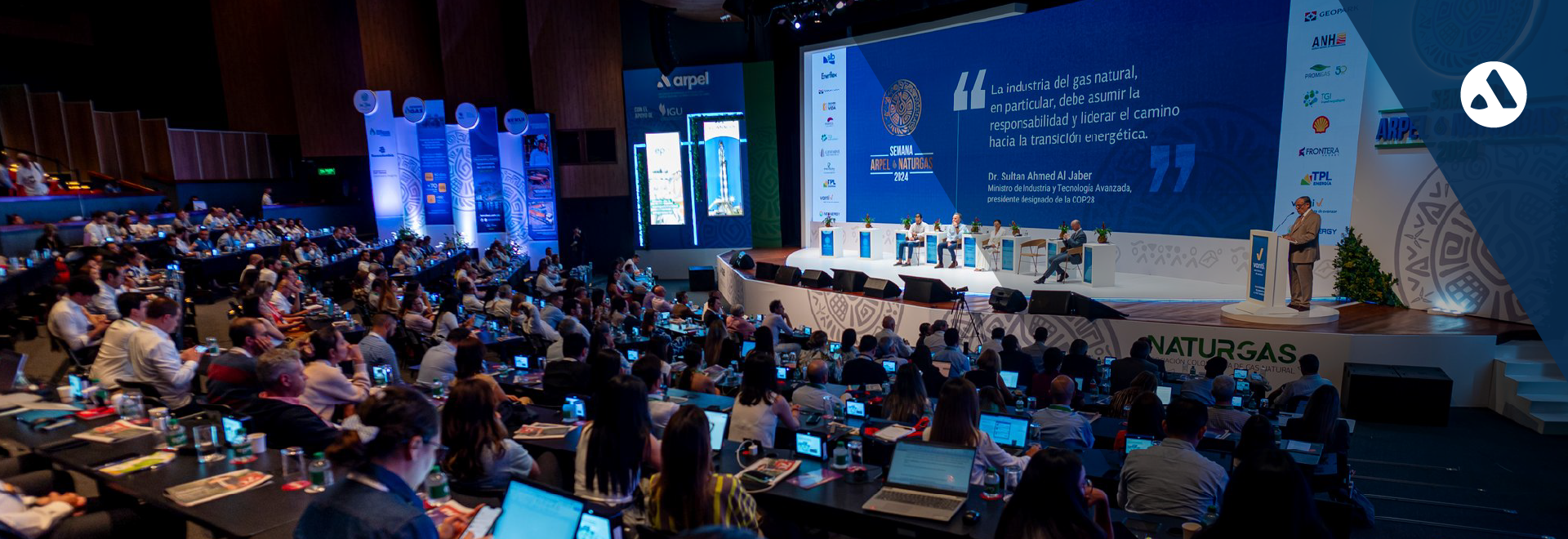
Arpel took part in the latest edition of the INGEPET Seminar, held in Lima, Peru, from October 28 to 31.
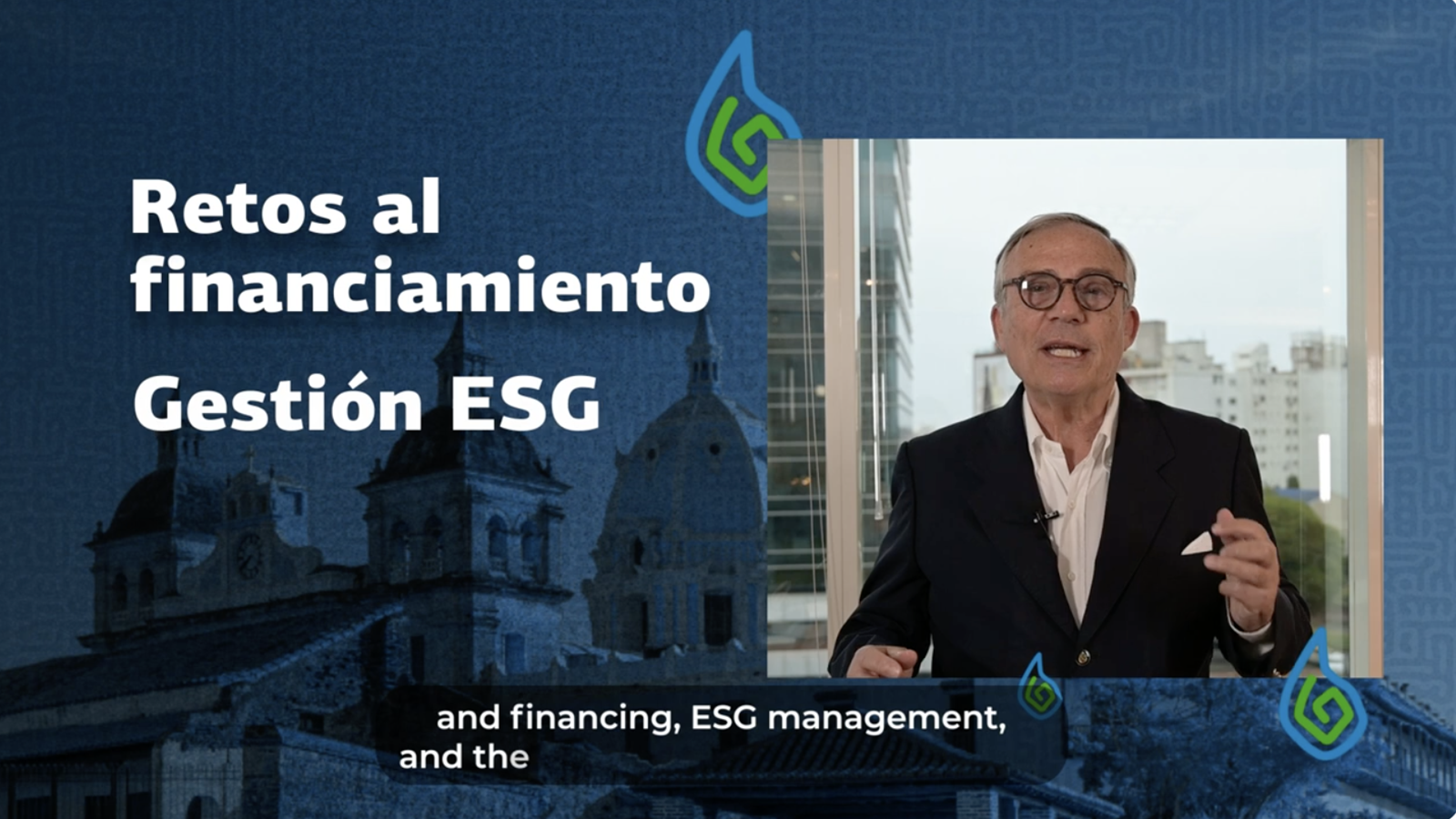
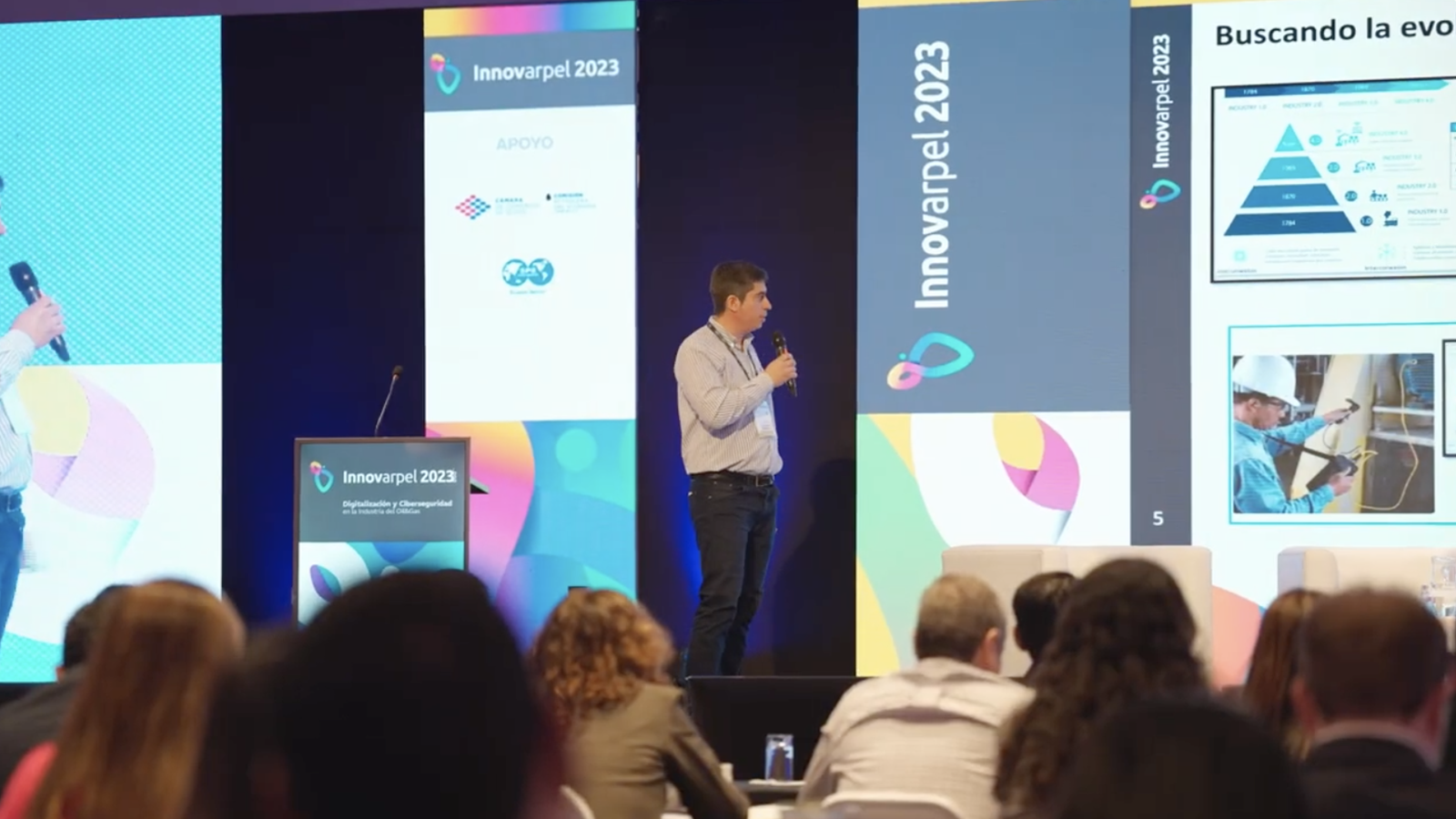
The event’s agenda included a remarkable presentation by Carlos Garibaldi, Arpel’s Executive Secretary, on “Geopolitics and the Energy Transition and Their Impacts on Latin America and the Caribbean.”
Garibaldi’s presentation focused on hydrocarbons and geopolitics; the realities and uncertainties of the energy transition; military and geopolitical disruptions and their impacts; and the opportunities for the region. Within this last topic, Garibaldi referred to natural gas as an ideal transition fuel, highlighted the region’s strong potential for renewable energy, and underscored the opportunity to leverage the United States–China polarity.
Hydrocarbon Agencies Forum
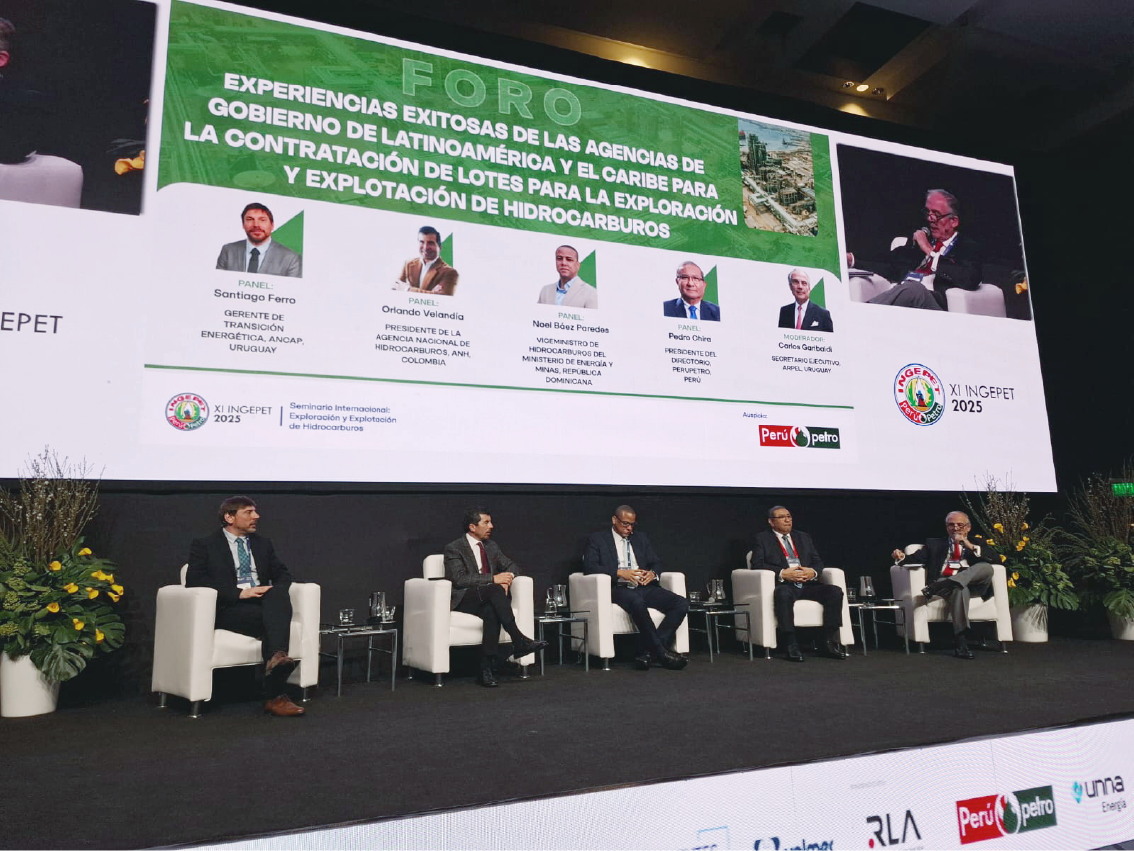
This important event for Peru’s oil and gas sector also included the forum “Successful Experiences of Government Agencies in Latin America and the Caribbean in Contracting Blocks for Hydrocarbon Exploration and Production.”
The panel featured Santiago Ferro, Energy Transition Manager at ANCAP (Uruguay); Orlando Velandia, President of the ANH (Colombia); Noel Báez Paredes, Vice Minister of Hydrocarbons (Dominican Republic); and Pedro Chira Fernández, Chairman of the Board of Directors of Perupetro (Peru). Panelists shared their experiences, strategies, and proposals to promote investment in hydrocarbon exploration and production.
The panel was moderated by Carlos Garibaldi on behalf of Arpel.
The Strategic Role of Women in the Hydrocarbon Sector
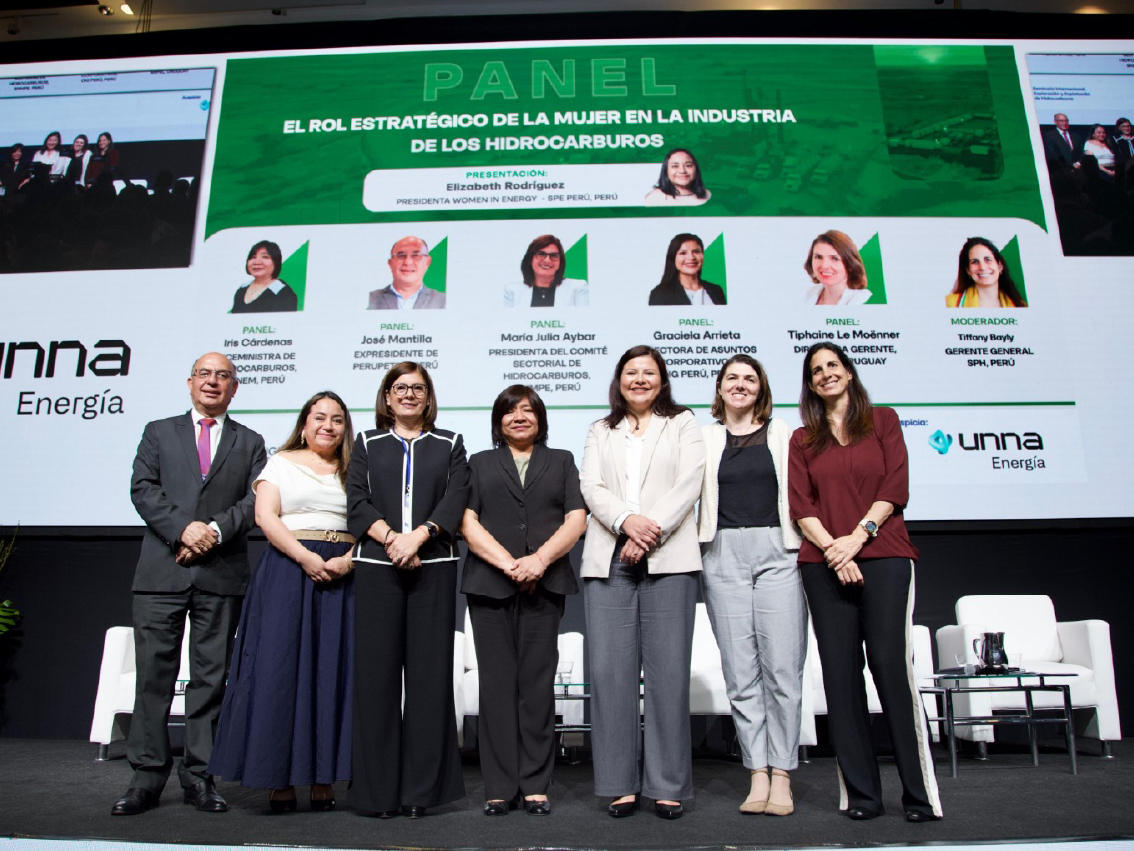
The seminar’s agenda included a panel dedicated to the strategic role of women in the hydrocarbon sector.
Opening the session, Elizabeth Rodríguez Armas, President of Women in Energy – SPE Lima Section, presented a compelling assessment of the gender gap at both the global level and in Peru.
While women represent around 23% of the sector’s global workforce and between 17% and 22% of Peru’s energy sector workforce, their participation in senior leadership positions remains limited.
This situation is driven by multiple structural and cultural barriers, including gender stereotypes, unequal access to training, insufficient labor policies, biased organizational structures, pay gaps, the glass ceiling, and the double workload—factors that lead to talent loss, reduced diversity, and professional disengagement.
This presentation was followed by a panel moderated by Tiffany Bayly, CEO of SPH, and composed of five panelists: María Julia Aybar, Country Manager at Hunt Oil Company; Graciela Arrieta, Director of Corporate Affairs at OIG Peru; Iris Cárdenas, former Vice Minister of Hydrocarbons of Peru; José Mantilla, former President of Perupetro; and Tiphaine Le Moënner, Managing Director of Arpel.
Drawing on shared experiences, participants emphasized that organizational culture must evolve ahead of formal policies, and that leadership does not depend on position but can be exercised from any role by fostering dialogue, building support networks, and opening spaces for new voices.
Finally, it was emphasized that gender equality and diversity are not only a matter of fairness, but also a key strategy for competitiveness, innovation, and sustainability.
In this regard, the urgency of implementing concrete and measurable actions was highlighted, including transparency in gender indicators, mentorship programs, reviews of recruitment and promotion processes, and the strengthening of work-life balance policies.
Compartir en las redes