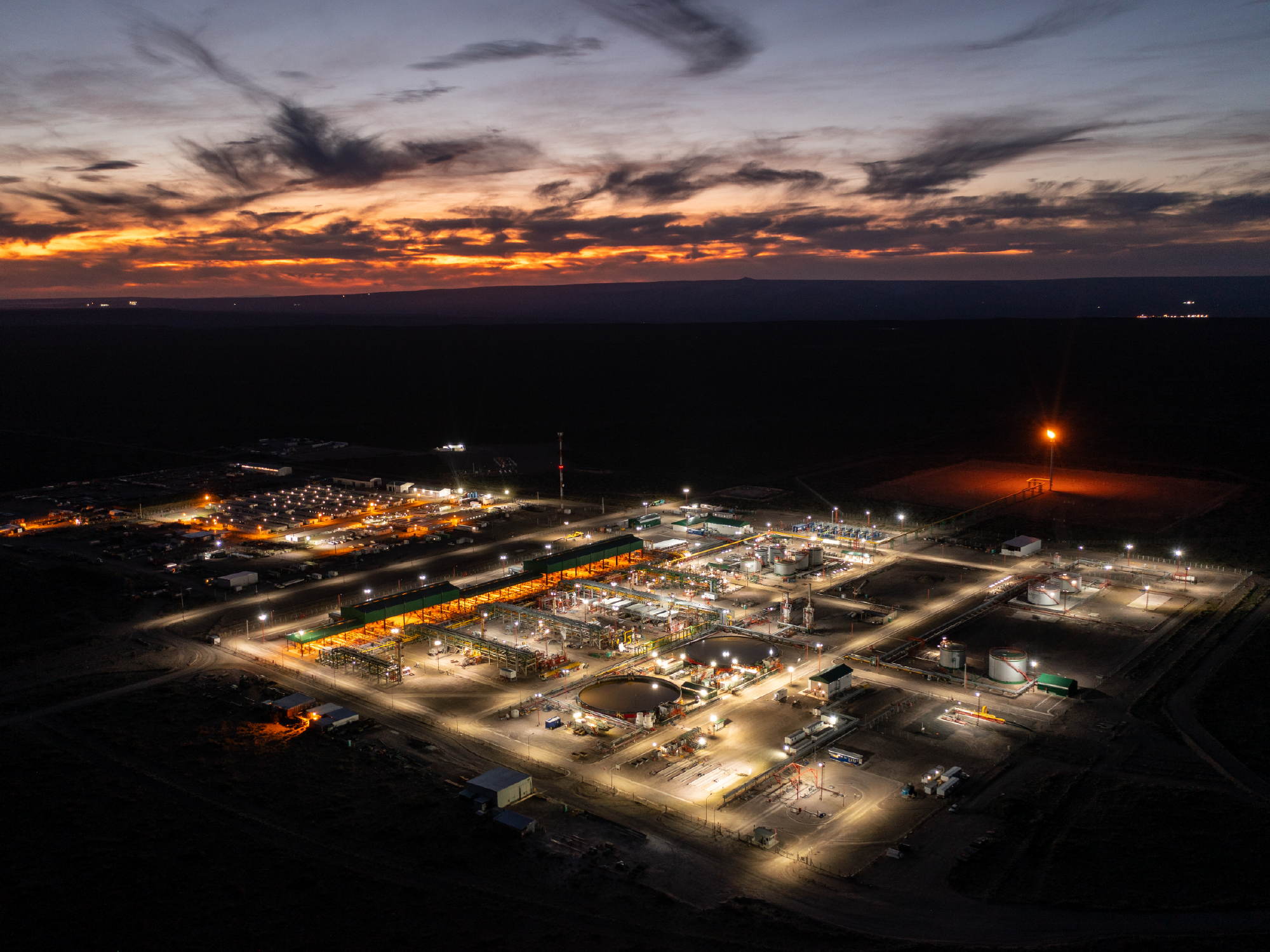
In late November, the conference “Unlocking the Potential of Vaca Muerta” was held virtually. Jointly organized by the Venezuelan Association of Gas Processors (AVPG) and Arpel, it was primarily aimed at professionals from Venezuela’s gas sector and the wider region. The event featured a presentation by Pablo Amoedo, Arpel’s Upstream Manager, and was moderated by José Cuello, a member of the AVPG Executive Committee.
Technical Content of the Conference
The presentation traced the development of Vaca Muerta from the initial geological assessment and characterization stage to its consolidation as a world-class play, structuring it into five phases: initial geological assessment and characterization; pilot projects and an accelerated learning curve; industrial scaling; the first “Factory” phase; and the current stage of large-scale expansion and production consolidation.
Key enabling factors were analyzed in detail, including extended-reach horizontal drilling, multi-stage hydraulic fracturing (including dual frac and simulfrac), the digitization of operations, and the optimization of logistics for water, sand, and evacuation infrastructure.
Relevance for the Gas Sector and for Arpel’s Member Companies
The focus on natural gas held particular interest for the Venezuelan audience, highlighting that Vaca Muerta accounts for nearly half of Argentina’s gas production and holds resources equivalent to more than 200 years of domestic consumption at current levels. The expansion projects for major trunk gas pipelines and the Argentina LNG plan were presented, both aimed at transforming this potential into sustained LNG exports to markets in the Americas, Europe, and Asia.
Social License, Regional Development, and Regulatory Frameworks
Another key focus was building social license in the Neuquén Basin, based on permanent dialogue forums, transparent environmental monitoring, high-quality local employment, and ESG standards aligned with international best practices. Regulatory and public policy changes that enabled the scale-up were also reviewed, ranging from incentive programs for unconventional gas to the current frameworks that underpin major infrastructure investments and export-oriented projects.
Value of Regional Exchange
This activity aligns with Arpel’s objective of promoting the exchange of experiences among producing countries in order to accelerate collective learning and enhance the region’s competitiveness.
The lessons learned from Vaca Muerta in the areas of unconventional resource development, evacuation infrastructure, liquefaction, and the management of socio-environmental impacts provide valuable inputs for Arpel’s member companies as they assess their own gas projects and resource monetization strategies.
Compartir en las redes