News

Gas Resources Drive a New Phase of Energy Expansion in Latin America and the Caribbean: Decarbonization, Transport, and Socioeconomic Growth

Gas Resources Drive a New Phase of Energy Expansion in Latin America and the Caribbean: Decarbonization, Transport, and Socioeconomic Growth

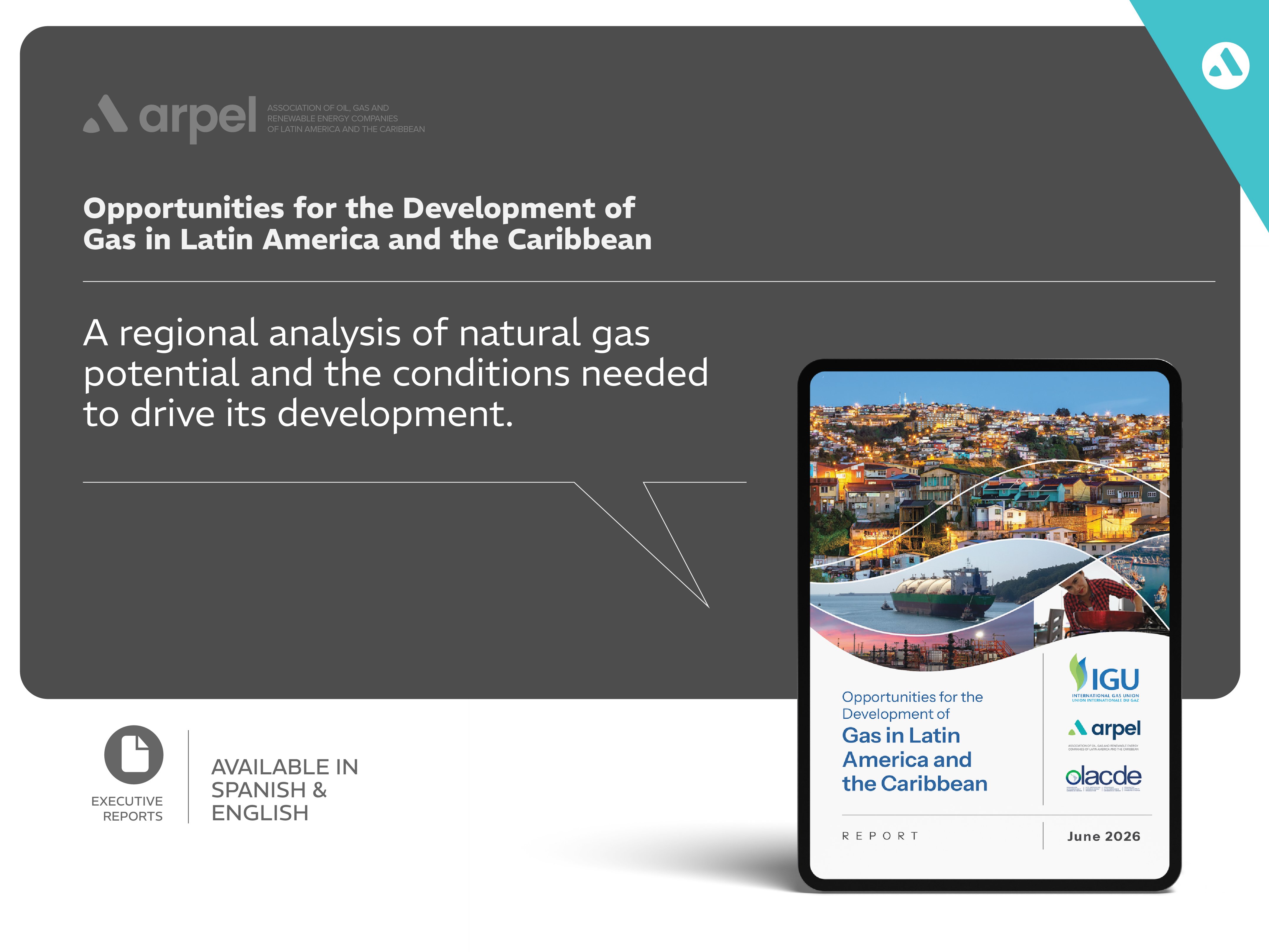
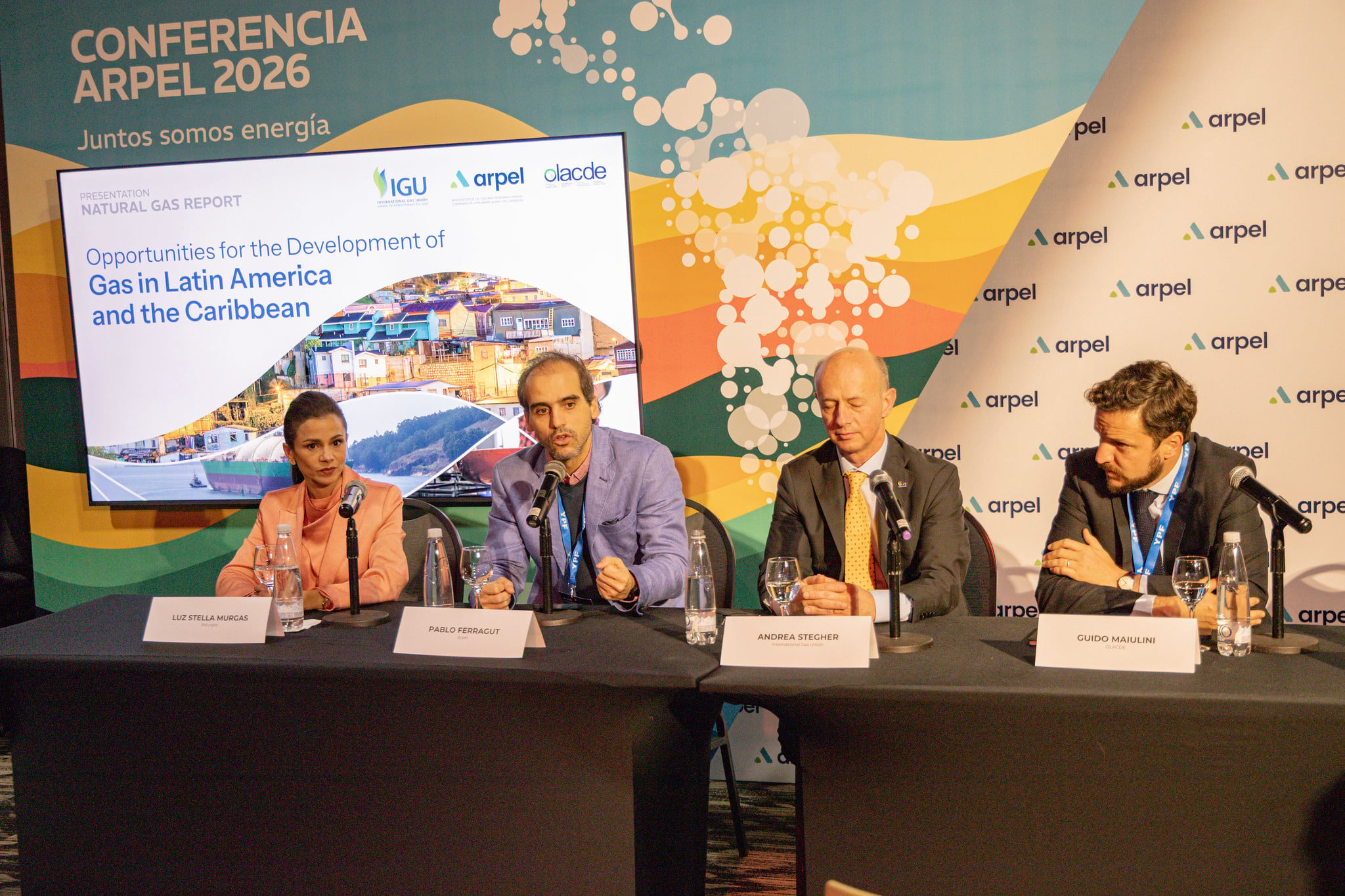
The report was jointly prepared by the International Gas Union (IGU), the Association of Oil, Gas and Renewable Energy Companies of Latin America and the Caribbean (ARPEL), and the Latin American and Caribbean Energy Organization (OLACDE).

The study highlights that Latin America and the Caribbean possess significant geological potential and vast energy resources. However, according to the report, which was unveiled on Tuesday, the region accounted for only 5% of global natural gas production in 2024. The report estimates that more than US$10 billion in investment will be required to close this gap and advance regional energy integration through the construction and expansion of cross-border gas pipeline infrastructure.

At the same time, the report warns that, in order to monetize reserves, mobilize public and private capital, and secure blended financing mechanisms and support from multilateral development banks, it is essential for legal frameworks and industry regulations to transcend political cycles and changes in government.

The report also notes that the reserves of Vaca Muerta, together with other conventional offshore projects and Brazil’s pre-salt fields, could usher in a new phase of energy expansion in the Southern Cone. These resources would complement the established production of countries such as Venezuela, Bolivia, Peru, and Trinidad and Tobago, as well as emerging exploration frontiers in Guyana and Suriname.

This development could generate direct benefits for Argentina by reducing LNG imports and increasing exports, positioning the country as a major player in the global LNG market. At the regional level, Argentine gas could support Brazil’s reindustrialization through competitive pricing, enable Bolivia to monetize its underutilized infrastructure through transit fees, and provide Chile and Uruguay with a more cost-effective alternative to imported LNG.

The Role of Natural Gas in Decarbonization

The report argues that natural gas can deliver rapid emissions reductions by replacing more carbon-intensive fuels in thermal power generation. According to the IPCC, the use of natural gas can reduce greenhouse gas emissions by approximately 24%, 28%, and 42% per unit of primary energy when replacing diesel, fuel oil, and coal in electricity generation, respectively.

In addition, natural gas serves as an essential backup for variable renewable energy sources such as solar and wind, particularly during hydrological crises. This was evident in Brazil in 2021, when gas-fired generation had to double in order to avoid power supply disruptions.

This substitution is particularly relevant in several countries across Central America and the Caribbean, where electricity systems continue to rely heavily on petroleum-derived fuels. Countries such as Grenada, Haiti, Barbados, Cuba, Nicaragua, Belize, Guyana, and Suriname depend on these liquid fuels for more than 50% of their electricity generation. In these systems, switching to natural gas can deliver immediate environmental and economic benefits without requiring major structural changes to the operation of the power system.

The Role of Natural Gas in Transport

In the heavy-duty transport sector, the shift toward Compressed Natural Gas (CNG) and Liquefied Natural Gas (LNG) can reduce emissions by approximately 20%, offering a commercially available solution to advance the decarbonization of the sector. The report notes that, while low-carbon fuels such as methanol, ammonia, and hydrogen hold significant long-term potential, both the technologies and the infrastructure required for their deployment continue to face maturity and scalability challenges.

From a supply-side perspective, monetizing the region’s natural gas reserves can drive economic growth, strengthen trade balances through increased exports and reduced imports, and support social development by expanding access to cleaner, more affordable, and reliable energy.

A clear example can be found in Colombia, where the Multidimensional Energy Poverty Index (IMPE), developed by Promigas, shows that the incidence of energy poverty declined from 16.9% to 15.4% between 2022 and 2024, representing an improvement for approximately 300,000 people and demonstrating that access to affordable energy directly improves quality of life.

In addition, the integration of renewable gases such as biomethane can strengthen local development, create income-generating opportunities in rural areas, improve waste management, and reduce emissions, while leveraging existing infrastructure.

About the Report: Opportunities for the Development of Gas in Latin America and the Caribbean

The report aims to contribute constructively to the international energy dialogue by highlighting the role that natural gas can play in supporting the region’s energy transition, strengthening energy security, and fostering sustainable socioeconomic development.

Its preparation included consultations with leading companies in the sector, national gas associations, and regional experts, reflecting a broad industry perspective on the opportunities and challenges facing the natural gas sector across the region.

 

  • Tags:
    • Security
    • Environment
    • Digitalization
    • Exploration
    • Energy Transitions
    • Sustainability
    • Cybersecurity
    • Occupational Health
    • Supply Chain
    • Human Talent and Knowledge Management
    • Regulation
    • Management
    • Other Energies
    • Transportation
    • Refinement
    • Production
    • Gas
    • Terminals
    • Petrochemicals

Related content

News (4)
Latin America Becomes the Energy Answer in an Uncertain and Redefining World

Security, Environment, Digitalization

Latin America Becomes the Energy Answer in an Uncertain and Redefining World

The world is looking to Latin America. At the opening of the Arpel 2026 Conference, international... Read more
Geopolitics, Vaca Muerta and the role of natural gas in the region take center stage at Arpel Conference 2026

Security, Environment, Digitalization

Geopolitics, Vaca Muerta and the role of natural gas in the region take center stage at Arpel Conference 2026

In an international context shaped by geopolitical tensions and structural changes in energy... Read more
The 8th Arpel Conference 2026 to be held in Buenos Aires

Security, Environment, Digitalization

The 8th Arpel Conference 2026 to be held in Buenos Aires

From June 1 to 4, the Hilton Buenos Aires Hotel will host this regional dialogue forum for the oil... Read more
Arpel welcomes Rystad Energy as a new cooperating member

Environment, Energy Transitions, Digitalization

Arpel welcomes Rystad Energy as a new cooperating member

Rystad Energy has joined Arpel as a new member. Rystad Energy provides independent data, analytics,... Read more
Events (4)
Arpel-Naturgas Week 2024

Refinement, Terminals, Gas

Arpel-Naturgas Week 2024

Arpel, the Association of Oil, Gas, and Renewable Energy Companies of Latin America and the... More info
Improving Process Safety Performance

Security

Improving Process Safety Performance

API published the third edition of Recommended Practice (RP) 754, Process Safety Performance... More info
Just Energy Transitions in Latin America and the Caribbean

Energy Transitions

Just Energy Transitions in Latin America and the Caribbean

ARPEL Side Event at 26th World Energy Congres : Just Energy Transitions in Latin America and the... More info
Status of Net Zero Reporting in the Latin American Oil and Gas sector

Sustainability

Status of Net Zero Reporting in the Latin American Oil and Gas sector

To present the results of a study focused on establishing a baseline of emissions reporting (scope... More info
courses (4)
EN99: Handling and Management of Industrial Cybersecurity Alerts Applying the ISA/IEC-62443 Standard

Cybersecurity

EN99: Handling and Management of Industrial Cybersecurity Alerts Applying the ISA/IEC-62443 Standard

More info
EN50: Industrial Cybersecurity Management for projects in the Energy, Oil & Gas sector

Cybersecurity

EN50: Industrial Cybersecurity Management for projects in the Energy, Oil & Gas sector

More info
EN60: Cyber Risk Assessment in New and Existing Industrial Systems in Energy, Oil & Gas.

Cybersecurity

EN60: Cyber Risk Assessment in New and Existing Industrial Systems in Energy, Oil & Gas.

More info
EN61: Design and Implementation of Cybersecurity Recommendations in Zones and Conduits

Cybersecurity

EN61: Design and Implementation of Cybersecurity Recommendations in Zones and Conduits

More info
Publications (4)
Arpel upper management report on climate change COP27

Production

Arpel upper management report on climate change COP27

This report summarizes the main conclusions from the 27th Conference of the Parties to the United... More info
Just Energy Transitions in Latin America and the Caribbean

Energy Transitions

Just Energy Transitions in Latin America and the Caribbean

This document describes the consensual position of Arpel member companies regarding the concept of... More info
Industrial Cybersecurity Maturity Benchmarking in the oil and gas industry for Latin America and the Caribbean

Cybersecurity

Industrial Cybersecurity Maturity Benchmarking in the oil and gas industry for Latin America and the Caribbean

This manual provides a general description of the methodology developed by Arpel to carry out the... More info
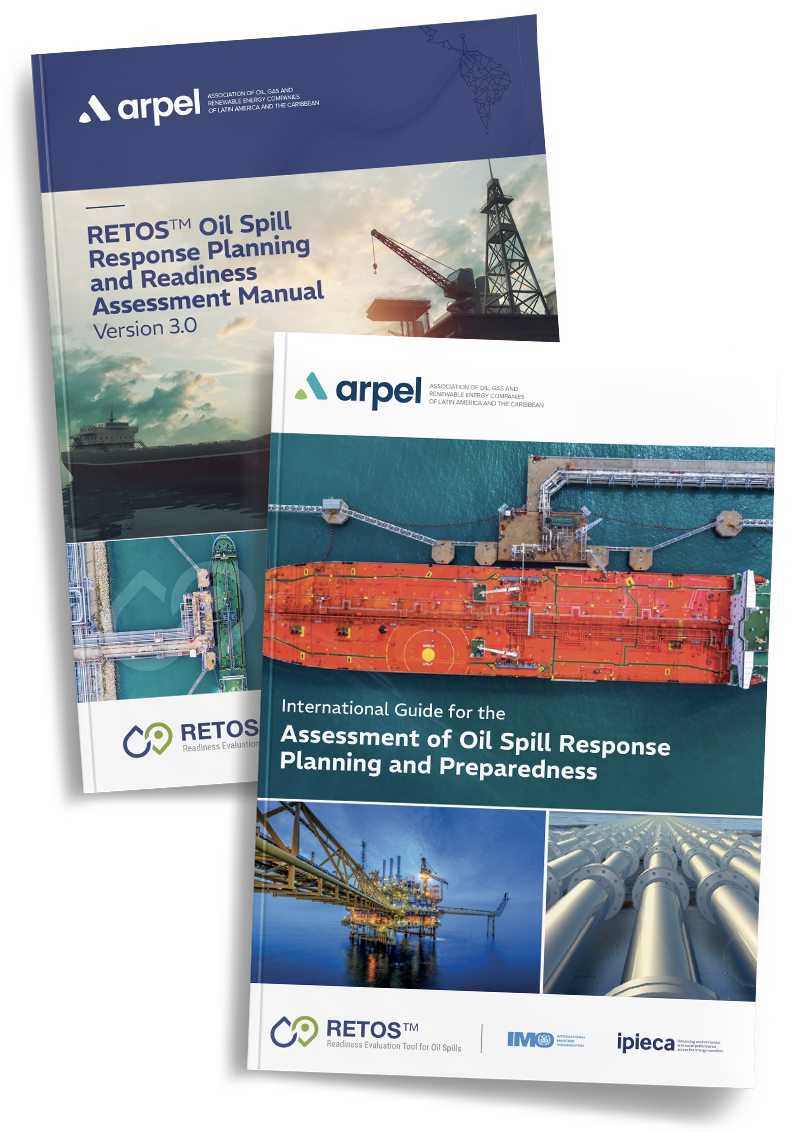
Assessment of Oil Spill Response Planning and Preparedness: International Guide and RETOS V3.0

Production

Assessment of Oil Spill Response Planning and Preparedness: International Guide and RETOS V3.0

The International Guide for the Assessment of Oil Spill Response Planning and Preparedness provides... More info
Arpel Channel (4)
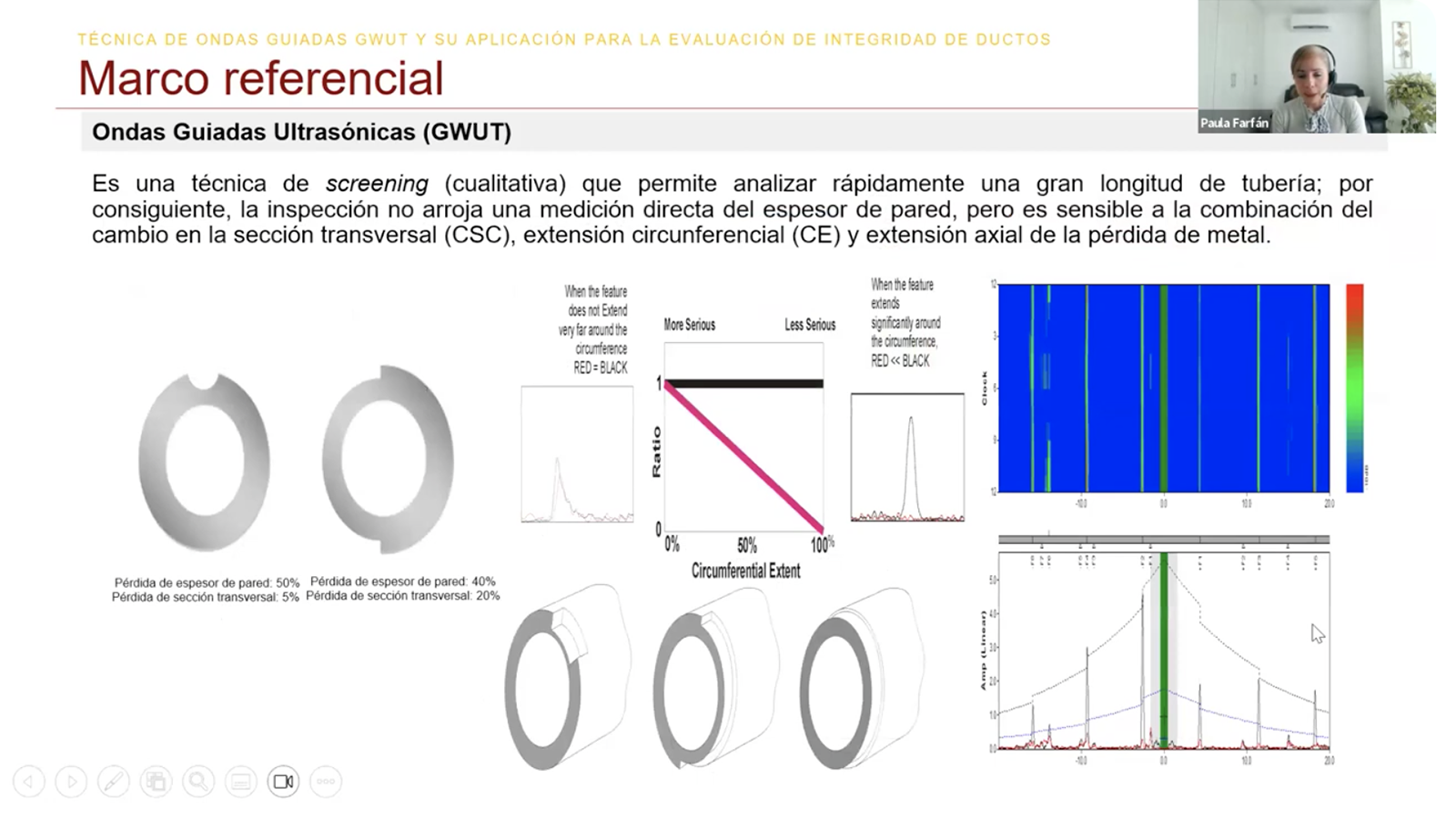
Webinar Guided Wave Ultrasonic Testing (GWUT) Technique. Application for Pipeline Integrity Assessment

Terminals, Transportation, Refinement

Webinar Guided Wave Ultrasonic Testing (GWUT) Technique. Application for Pipeline Integrity Assessment

Watch video
Arpel-Naturgas Week 2024 - April 8th to 12th in Cartagena de Indias

Environment, Energy Transitions, Sustainability

Arpel-Naturgas Week 2024 - April 8th to 12th in Cartagena de Indias

Watch video
Innovarpel 2023, first edition of a technical event dedicated to Digitalization and Cybersecurity

Digitalization, Cybersecurity, Supply Chain

Innovarpel 2023, first edition of a technical event dedicated to Digitalization and Cybersecurity

Watch video
VIDEO SUMMARY: Arpel-Naturgas Week 2024. From April 8th to April 12th in Cartagena de Indias, Colombia

Environment, Energy Transitions, Sustainability

VIDEO SUMMARY: Arpel-Naturgas Week 2024. From April 8th to April 12th in Cartagena de Indias, Colombia

Watch video

Receive a summary of the main activities of the Association by e-mail.

Arpel Newsletter

SUBSCRIBE

ASSOCIATION OF OIL, GAS AND RENEWABLE ENERGY COMPANIES OF LATIN AMERICA AND THE CARIBBEAN

Av. Luis A. de Herrera 1248, WTC, Tower 2, 7th Floor, Office 717. Montevideo, Uruguay.
Phone: (+598) 2623 6993 – Email: info@arpel.org.uy

Contact Us